Tea and Caffeine: A Practical Guide
How much caffeine is in tea?
Tea contains caffeine, but the amount varies widely depending on the type, leaf amount, water temperature, and steep time. A cup of black tea is often around 40-70mg, while herbal infusions and pure flower teas have no caffeine because they do not contain Camellia sinensis leaves.
Tea also contains L-theanine, an amino acid that changes the way many people experience tea compared with coffee. The effect is personal, so the best guide is still your own sensitivity.

Tea caffeine levels: from high to none

High caffeine teas (about 40-70mg per cup): Black teas like Lapsang Souchong or Yunnan Black Tea. Good for mornings or people moving across from coffee.
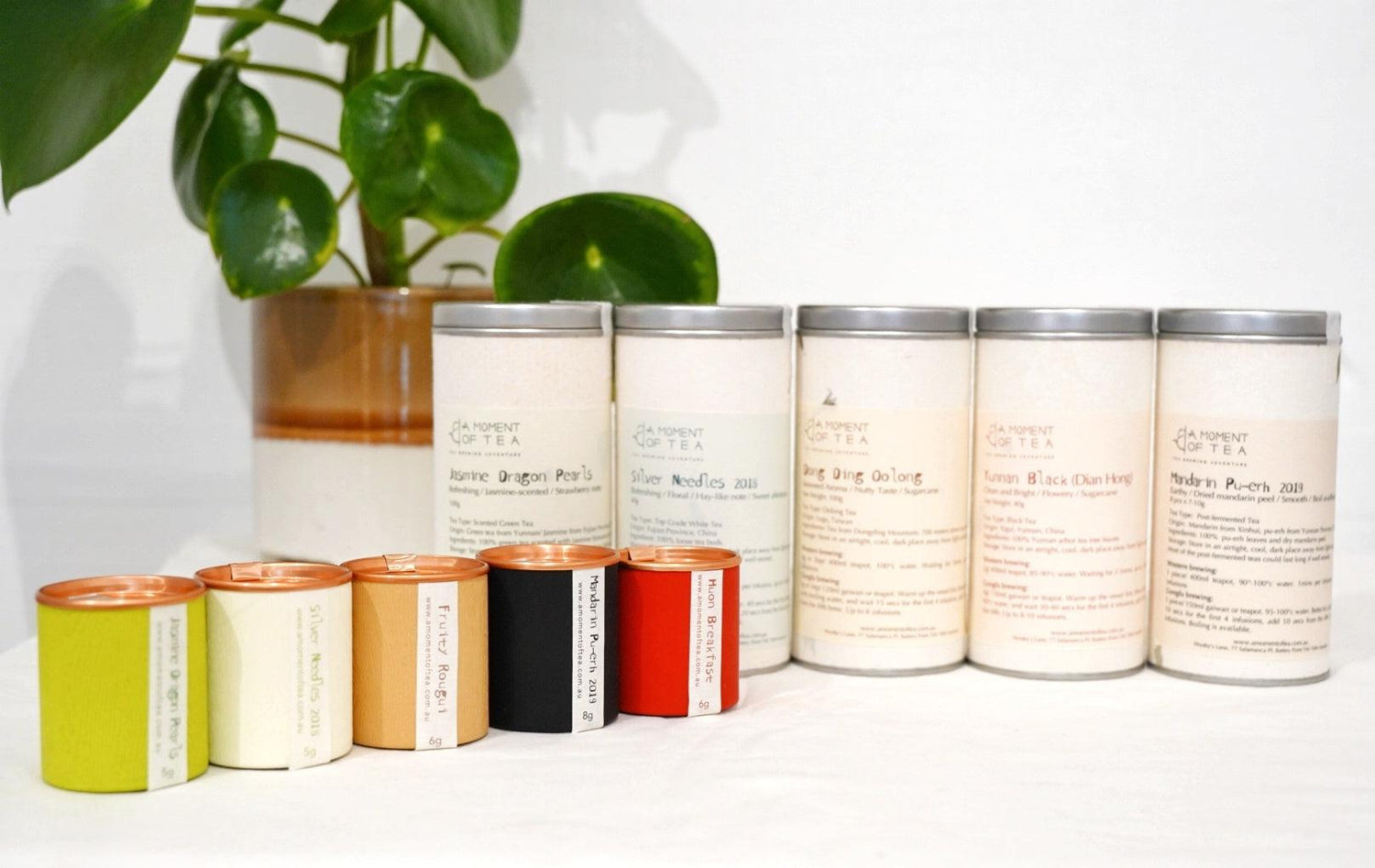
Medium caffeine teas (about 30-50mg per cup): Oolongs like Big Red Robe and scented green teas like Jasmine Dragon Pearls. Ripe pu-erhs with younger buds and tips — like our Ripe Pu-erh 2021, "The One" cake, and Mandarin Pu-erh — also sit here. These often suit morning to afternoon cups.
Low caffeine teas (about 15-30mg per cup): White teas, pure mature-leaf ripe pu-erhs (huang pian styles), and blended ripe pu-erhs. Our Tasmanian Lavender Puerh and Sweet Stock huang pian brick sit here — gentle options for afternoon or evening cups.

Caffeine-free teas (0mg): Herbal infusions and pure flower teas like Sweet Rose Dew, Osmanthus Flower Tea, and the pure blossom varieties of Blooming Flower Tea. Blooming tea varieties that include green or black tea leaves contain light caffeine.

What determines caffeine in your cup?
Three main factors:
Processing method: Fully oxidised teas like black tea are usually higher in caffeine in the cup. White teas and pure mature-leaf ripe pu-erhs are often lower. Herbal infusions are caffeine-free when they contain no tea leaves.
Leaf selection: Young buds and tips often have more caffeine than mature leaves. This is why a bud-heavy tea can feel stronger than a leaf-heavy tea. For ripe pu-erh this is the main reason huang pian (mature-leaf) styles sit lower than bud-containing styles.
Brewing method: More leaf, hotter water, and longer steeping usually extract more caffeine.
Does ageing reduce caffeine? With white tea, caffeine may stay fairly stable over time. With ripe pu-erh, fermentation may reduce caffeine somewhat, but exact numbers vary by tea and brewing method.
How does tea caffeine compare to coffee?
A cup of Lapsang Souchong at roughly 50-70mg has less caffeine than many coffees. Tea and coffee can also feel different because tea contains L-theanine as well as caffeine. Some customers describe tea as feeling steadier than coffee, but sensitivity varies from person to person.
When should you drink each type of tea?
Morning: Higher-caffeine teas such as Yunnan Black, Tasmanian Breakfast, matcha, or gyokuro.
Afternoon: Medium-caffeine teas such as oolongs, jasmine green tea, or bud-containing ripe pu-erhs.
Evening: Low-caffeine or caffeine-free teas such as Lavender Puerh, Sweet Stock huang pian, white tea, rose, osmanthus, or pure blossom blooming tea. If you are sensitive to caffeine, choose the caffeine-free options.

Caffeine-free options: Chen Pi, Sweet Rose Dew, Osmanthus Flower Tea, and pure blossom Blooming Flower Tea.
Can you control caffeine with brewing?
How you brew makes a difference:
Hotter water and longer steeps extract more caffeine. Cooler water and shorter steeps extract less. Cold brewing can reduce caffeine extraction compared with hot brewing, though the exact amount depends on the tea and steep time.
First steeps release a lot of what is in the leaf. Some people do a quick rinse, pour it off, then brew normally. This can reduce caffeine a little, but it also changes flavour.
A note from Joanne

When someone at the Tea Bar tells me they want to cut back on caffeine but don't want to give up flavour, I usually ask what time of day they drink tea. If it's afternoon, Lavender Puerh, Sweet Stock huang pian, or a white tea can be a good place to start. If it's evening and they want no caffeine, I point them toward Sweet Rose Dew, Osmanthus Flower Tea, or Chen Pi.
If you want to experiment, our sampler packs include teas across the caffeine spectrum, so you can figure out where your own comfort level sits.
Common questions about tea and caffeine
Does green tea have caffeine?
Yes. Green tea typically has 30-50mg per cup, though the exact amount depends on the tea and how you brew it. Cooler water and shorter steeps usually extract less caffeine.
Which teas have no caffeine?
Pure herbal and flower infusions have no caffeine when they contain no tea leaves. Examples include Sweet Rose Dew, Osmanthus Flower Tea, Chen Pi, and the pure blossom varieties of Blooming Flower Tea.
Can I drink low-caffeine tea in the evening?
Many people do, but caffeine sensitivity varies. If you are sensitive to caffeine, choose caffeine-free teas in the evening.
Can children drink tea?
Caffeine-free herbal or flower infusions are usually the simplest option. For caffeinated teas, children can be more sensitive than adults, so check with your GP if you're unsure.
Last updated: May 2026
If you're in Hobart, drop by our Salamanca Tea Bar — we'll brew whatever interests you, no pressure to buy. You'll also find us at Salamanca Market every Saturday morning.