Chinese Tea: What to Try First and How to Brew It
You don't need to memorise the six categories of Chinese tea before you buy your first packet. The easier way in is to start from something you already drink and pick the Chinese tea closest to it. This guide does exactly that, then shows you how to brew whatever you choose. If you'd like the background first, our beginner's guide covers what Chinese tea actually is, and there's a separate guide to the six types of Chinese tea if you want the full classification.
Our founder Joanne trained at Lian Yu Tea School in Beijing starting in 2014, and we source our teas directly from the regions where they're made. The recommendations below are the ones we hand to people at our Hobart Tea Bar when they ask where to start.

What to try first
Start from what's already in your cupboard:
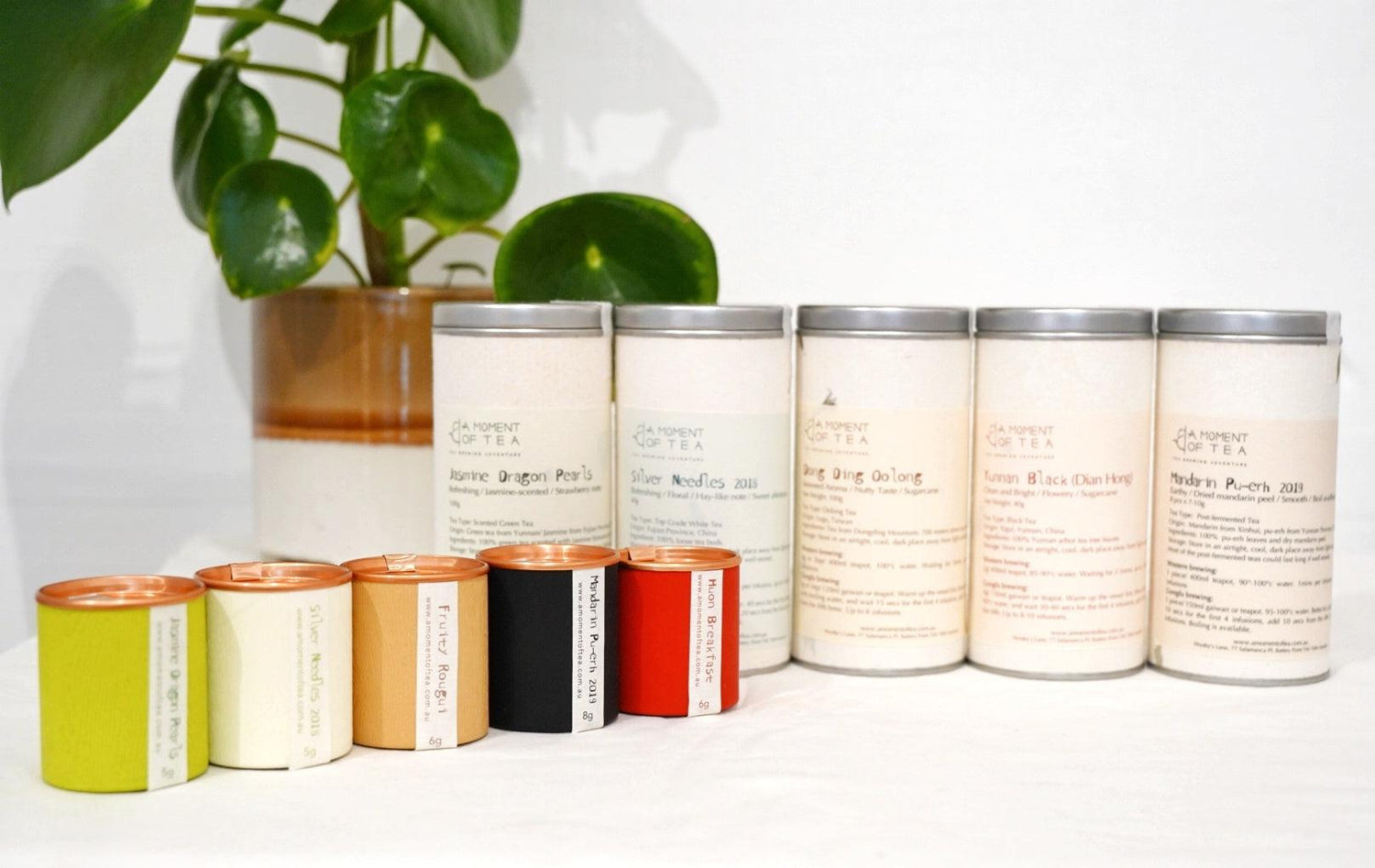
You drink English Breakfast or Earl Grey. Try Yunnan Black Tea (Dian Hong), from $8. It's the same family as your breakfast tea, with malty, chocolate notes and enough natural sweetness that you won't miss the milk. If you like a bolder cup, Lapsang Souchong, from $10, is the original pine-smoked black tea from the Wuyi Mountains.
You already drink green tea or Japanese tea. Try Dragon Well (Longjing), from $10. China's most famous green tea is pan-fired rather than steamed, so it tastes nutty and smooth where Japanese greens taste grassy and marine.
You prefer lighter, gentler flavours. Try Jasmine Dragon Pearls, from $8. Hand-rolled green tea scented with fresh jasmine blossoms. The scent makes it immediately approachable.
You like floral or complex drinks. Try Alishan Oolong, from $11. Buttery and floral, and the flavour changes noticeably from steep to steep.
You drink herbal tea, or want to skip caffeine. Try Sweet Rose Dew (from $8) or Osmanthus Flower Tea (from $5). Both are pure flowers with no tea leaves, so they're naturally caffeine-free.
You want something unusual. Try Tasmanian Lavender Puerh, from $7. Earthy Menghai ripe pu-erh meets Tasmanian lavender. Awarded at the 2025 Royal Tasmanian Fine Food Awards.
Can't decide?
Our Special Tea Box ($49) comes with three teas — choose the Best Selling set (Chinese classics) or the Tasmanian Special set (local blends). Or grab individual samples from $5 and run your own tasting at home.
How do you brew Chinese tea?
There are two main approaches, and both work well:
Western-style brewing
Use 2-3g of tea in a 200-300ml teapot or mug. Steep for a couple of minutes, taste, and adjust next time. This is the simpler method — one or two good cups per brewing. Our glass teapot with infuser works well for this.
Gongfu-style brewing
Use 5-8g of tea in a small vessel (100-150ml) — a gaiwan or small teapot. Steep for 10-30 seconds, then pour. Repeat for 5-15 steeps. Each steep tastes different, which is the main reason people brew this way. It works particularly well with oolong and pu-erh.

Quick temperature guide
White tea: 85-90°C. Green tea: 80°C. Oolong: 90-95°C. Black tea: 90-95°C. Pu-erh: 95-100°C (boiling is fine). Every tea in our collection includes specific brewing instructions.

Why origin is worth checking when you buy
China's tea regions are as varied as wine regions. The same tea plant grown in different soil and climate produces noticeably different results, and a label that names a real place — Fuding for white tea, the Wuyi Mountains for rock oolong, Hangzhou for Dragon Well — usually means someone can tell you who made the tea and how.

Our pu-erh and black teas come from Yunnan's ancient tea forests: Raw Pu-erh Ancient Single Tree and our Yunnan Black Tea are both from the Xigui area, known for bright citrus notes unusual in pu-erh. Our white teas come from Fuding, and our rock oolongs and Lapsang Souchong from the Wuyi Mountains, all in Fujian province. If the places behind the teas interest you, we've written full guides to Yunnan, the birthplace of tea and Fujian, China's most diverse tea province.
A note from Joanne
The thing I always tell people at our Tea Bar is: you don't need to know all six categories to enjoy Chinese tea. Pick one tea that sounds good, brew it at roughly the right temperature, and drink it. The knowledge builds naturally from there.
If you're curious how these teas came to be made this way, our history of tea tells the longer story. And if you're in Hobart, come to our Tea Bar at Salamanca Art Centre — I can brew a few options for you and we'll find what suits your taste. We also run tea workshops for people who want to go deeper into Gongfu brewing.


Common questions about choosing Chinese tea
What's the best Chinese tea for a beginner?
Jasmine Dragon Pearls is the easiest starting point — the jasmine scent makes it immediately approachable and it brews forgivingly. If you already drink English Breakfast, try Yunnan Black Tea for a similar profile with more character. Our tea samples from $5 let you try several before committing.
Where can I buy authentic Chinese tea in Australia?
A Moment of Tea is a specialty Chinese tea shop based at 77 Salamanca Place, Hobart, Tasmania. We source directly from Chinese tea regions and carry over 100 varieties. You can visit our Tea Bar, find us at Salamanca Market on Saturdays, or shop online at amomentoftea.com.au with delivery across Australia.
Do I need a gaiwan to drink Chinese tea?
No. Any mug or teapot works. Gongfu brewing with a gaiwan gives you more detail and more steeps from the same leaves, but Western-style brewing in a regular teapot is fine. Start with what's comfortable and add tools later if you want to.
Is Chinese tea safe — are there pesticide concerns?
We select teas from producers who use traditional growing methods. Several of our teas, including the Yunnan teas from Xigui, come from old-growth trees that have never been sprayed. We can tell you the specific origin and growing conditions for any tea in our collection.
Last updated: July 2026