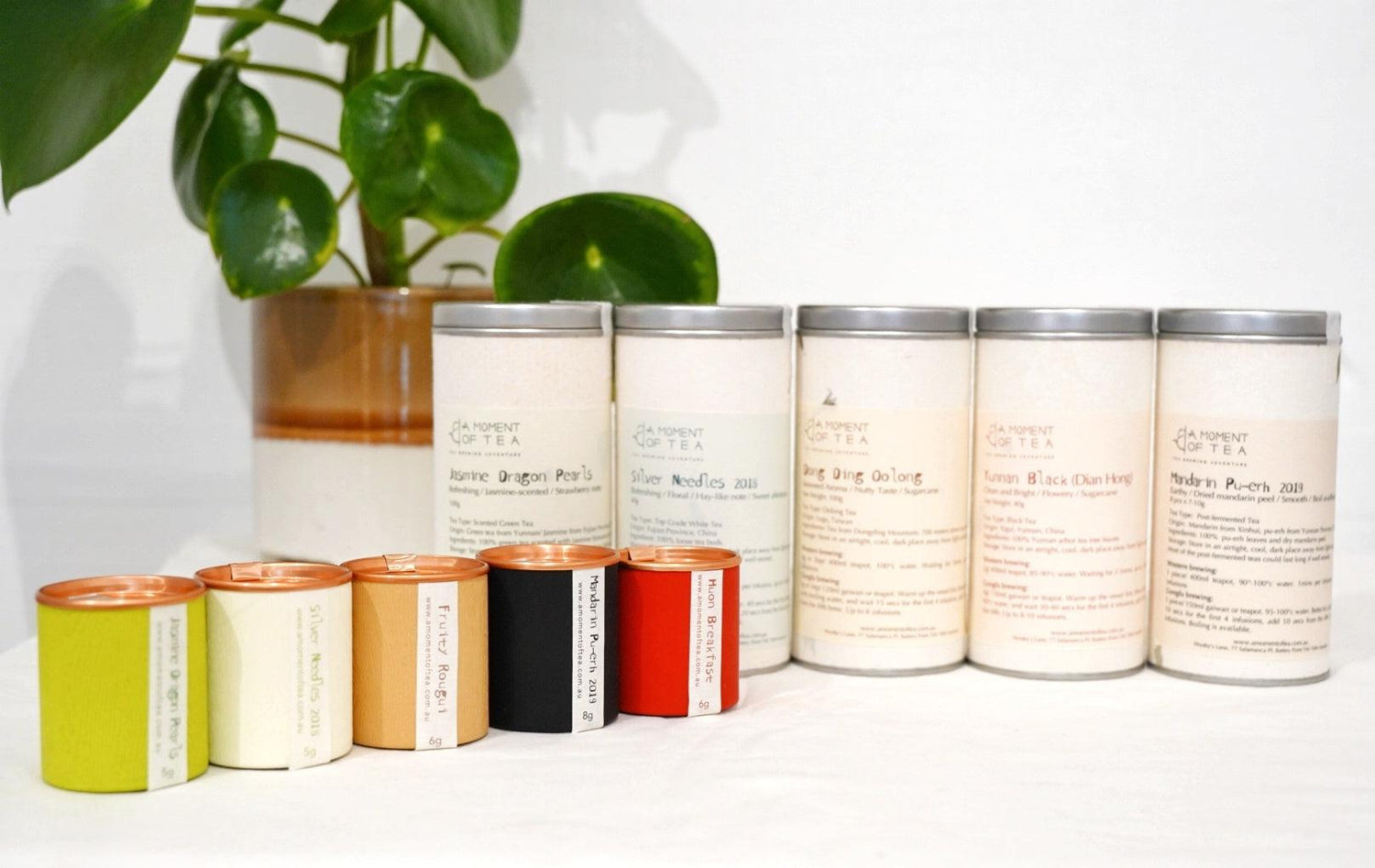

Seasonal tea guide: what to drink and when
When our Tasmanian Lavender Puerh was awarded a Silver Medal at the 2025 Royal Tasmanian Fine Food Awards, one of the first questions people asked was: "When should I drink this?" The short answer is winter — pu-erh is warming, lavender is calming, and Hobart winters call for both. But the longer answer is that every season has its teas, and knowing which ones to reach for can change how you feel throughout the year.
Seasonal tea drinking is a core idea in traditional Chinese medicine (TCM). The principle is simple: drink cooling teas in hot weather to clear excess heat, and warming teas in cold weather to support your body's warmth. In between, neutral teas keep things balanced. This is not a strict rule — it is a framework that has been practised in China for centuries and still guides how most Chinese tea drinkers choose what to brew each morning.
Tasmania makes this interesting because the seasons are reversed from China's. Our summer runs December to February, winter is June to August, and the transitions in between bring their own unpredictable weather. At the Tea Bar, we adjust our recommendations accordingly.

Why different seasons call for different teas
In TCM, the body's internal balance shifts with the seasons. Summer brings heat, which the body tries to dispel. Winter brings cold, which the body needs to retain warmth against. The teas you drink can support either process — cooling when you need to cool down, warming when you need to warm up. We unpack the full warming-and-cooling framework in our tea and TCM guide.
This maps directly to how tea is processed. Minimal processing (green tea, white tea) preserves the leaf's natural cooling character. Heavy oxidation (red/black tea) and fermentation (ripe pu-erh) generate warmth through chemical transformation. Oolong (乌龙茶, wūlóng chá — literally "dark dragon") sits in the middle — partly oxidised, partly roasted, resulting in a neutral nature.
Roasting (焙火, bèihuǒ) also plays a role. A lightly roasted oolong is closer to neutral, while a heavily charcoal-roasted one leans warm. This means you can fine-tune your seasonal drinking within a single tea category.
The seasonal decision tree
Use this as a starting point. Start with the season, then narrow down by what you are looking for.
| Season (Tasmania) | TCM approach | If you want... | Try this |
|---|---|---|---|
|
Summer (Dec–Feb) |
Cool down, clear heat | Something fresh and grassy | Green tea — Genmai or Gyokuro |
| Something light and sweet | White tea — Silver Needles or Gong Mei | ||
| Something floral and refreshing | Jasmine Dragon Pearls or Osmanthus tea | ||
|
Autumn (Mar–May) |
Balance, transition | Something floral and balanced | Light oolong — Alishan High Mountain |
| Something richer as it cools | Dark oolong — Dong Ding or Big Red Robe | ||
|
Winter (Jun–Aug) |
Warm up, support energy | Something warming and smooth | Ripe Pu-erh or Tasmanian Lavender Puerh |
| Something sweet and full-bodied | Red/black tea — Lapsang Souchong | ||
| Something comforting and familiar | Mandarin Pu-erh — citrus + warmth | ||
|
Spring (Sep–Nov) |
Refresh, awaken | Something bright and floral | Jasmine Dragon Pearls or Gardenia White Tea |
| Something in-between | Light oolong — Alishan | ||
|
After a heavy meal (any season) |
Aid digestion | Something that cuts through richness | Ripe Pu-erh — traditional digestive |

Our seasonal picks at the Tea Bar
At the Tea Bar, what I recommend changes month to month. Here is what I find myself pouring most in each season:
Hobart summer (December–February): Silver Needles brewed at 80°C is my go-to suggestion. It is light, sweet, and cooling. For visitors who want something with more character, cold-brewed Jasmine Dragon Pearls works well — you steep it overnight in the fridge and the result is floral, clean and has no bitterness at all. Gardenia White Tea is another summer favourite — visitors often come in asking for it specifically.
MingLu, a customer who moved from Tasmania to Queensland, told us A Moment of Tea has been her go-to brand even after relocating. She orders online for the teas she first tried at our Salamanca Market stall — including several we recommend as summer teas.
Hobart autumn (March–May): This is oolong season. The weather starts cooling and a neutral tea feels right. Alishan High Mountain Oolong is a reliable choice — floral, buttery, and balanced. As it gets colder toward May, I shift toward darker oolongs. Dong Ding has a warmer roast character that bridges the gap between the lightness of summer teas and the depth of winter teas.
Hobart winter (June–August): Ripe pu-erh takes over. Tasmanian Lavender Puerh becomes the most requested tea at the Tea Bar during these months. The earthy pu-erh base warms you up, and the Tasmanian lavender adds a calming, gentle sweetness. Lapsang Souchong Smoked is another winter staple — the pine-smoke character feels like sitting by a fireplace. For something with citrus warmth, Mandarin Pu-erh combines dried mandarin peel with aged pu-erh. And for after-dinner cups in any season, our guide to low-caffeine teas for evening covers the gentler options.
Hobart spring (September–November): As the cold breaks, floral teas feel right again. Jasmine Dragon Pearls brewed hot is my spring default. The pearls unfurl as they steep — each one is a hand-rolled ball of green tea that absorbed jasmine fragrance over multiple scentings. Osmanthus tea is another good spring choice if you prefer something caffeine-free.

Common questions about seasonal tea drinking
Can I drink green tea in winter?
You can. TCM suggests it may not be ideal for people with cold constitutions, but if you enjoy green tea year-round, go for it. One compromise: try a pan-fired green tea (like Longjing) rather than a steamed one — the pan-firing process adds a touch of warmth to the tea's character.
Is cold-brewed tea OK in summer?
Cold brewing produces a smoother, less bitter result because cold water extracts fewer tannins. Green tea and jasmine tea cold-brew well. Steep 5g of leaves in 500ml of cold water overnight in the fridge. Strain and drink the next day.
What if I only want to buy one tea for all seasons?
Oolong is the answer. Its neutral TCM nature makes it appropriate year-round. Alishan High Mountain Oolong is versatile — light enough for warm days, substantial enough for cool ones. If you want something slightly richer, Dong Ding works across all seasons too.
Does aged tea change its seasonal suitability?
Yes. Ageing shifts a tea's character toward warmth. A fresh white tea (cool) becomes warmer with age. Our Aged White Tea 2012 is noticeably warmer than a current-year white tea — it works well into autumn and early winter, when a fresh white tea might feel too light.
Teas mentioned in this article
- Tasmanian Lavender Puerh
- Silver Needles White Tea
- Gong Mei White Tea 2020
- Jasmine Dragon Pearls
- Gardenia White Tea
- Osmanthus Flower Tea
- Alishan High Mountain Oolong
- Dong Ding Oolong
- Big Red Robe Oolong
- Lapsang Souchong Smoked
- Mandarin Pu-erh
- Ripe Pu-erh 2021
- Genmai Green Tea
- Gyokuro Japanese Green Tea
- Aged White Tea 2012
Browse our green teas, oolong teas, pu-erh teas and Tasmanian blends.
Published: June 2026 | Last updated: July 2026