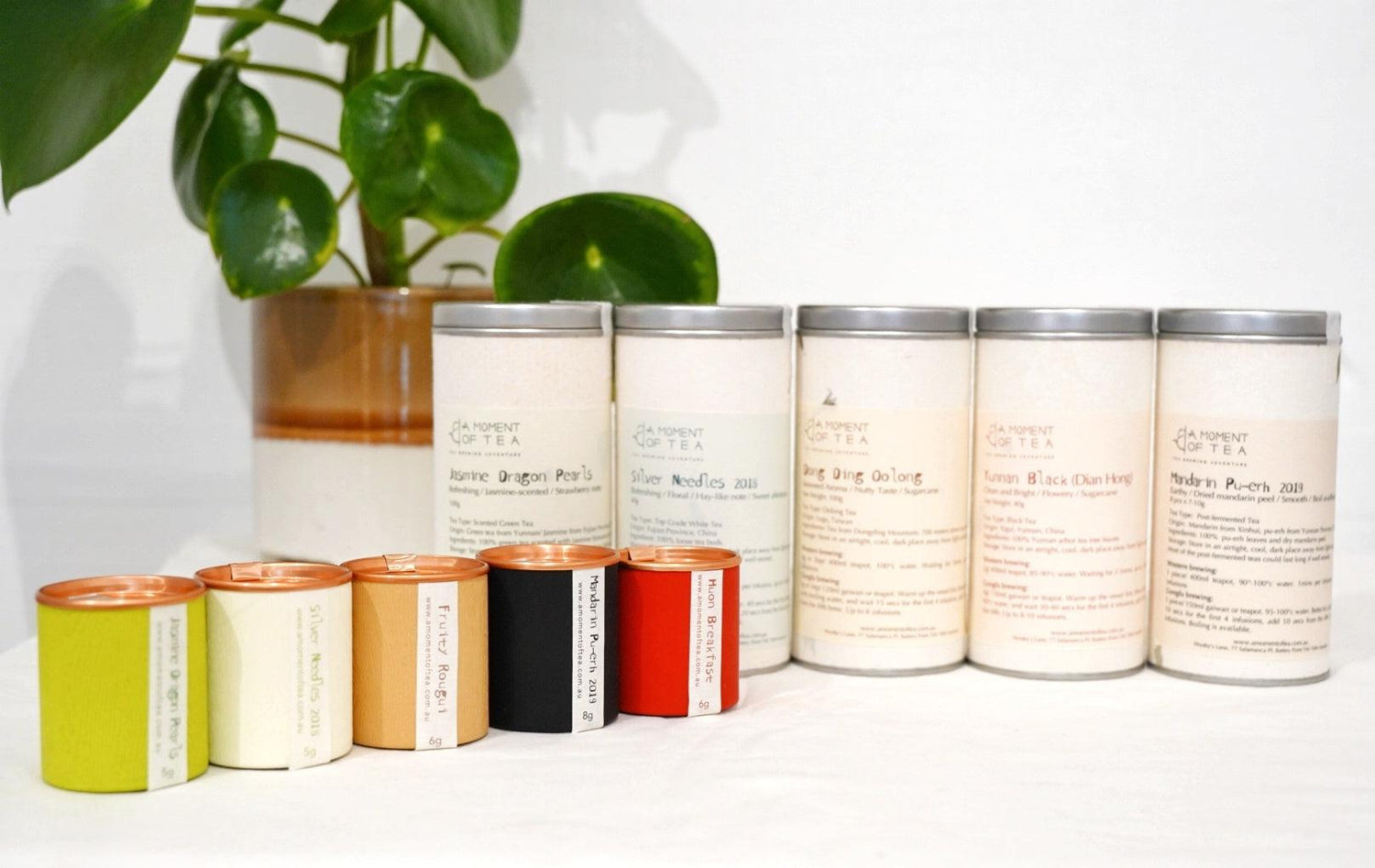

Tea and traditional Chinese medicine (TCM)
Does green tea really cool you down? Is pu-erh actually good for digestion? These are questions people ask at our Tea Bar every week, and the answers go back thousands of years.
In traditional Chinese medicine (TCM), tea is classified by its thermal nature and its effect on the body. Each of the six major tea types has a different property: some are cooling (凉性, liángxìng), some are warming (温性, wēnxìng), and some sit in between. These classifications are based on how the tea is processed, not just the plant it comes from. The same Camellia sinensis leaf can become a cooling green tea or a warming black tea depending on what happens to it after picking.
Note: The information below reflects traditional Chinese medicine perspectives and is not medical advice. If you have health concerns, consult a qualified practitioner.

The TCM framework: how tea types are classified
In TCM, all foods and drinks are categorised on a scale from cold (寒) to hot (热), with cool (凉) and warm (温) in between. Tea lands along this spectrum based on how much it has been oxidised, roasted, or fermented. Less processing keeps the leaf closer to its natural state — cooler. More processing generates heat through chemical transformation — warmer.
Here is how the six tea types map to TCM properties:
| Tea type | TCM nature | Traditional use | Best season | Example |
|---|---|---|---|---|
| Green (绿茶, lǜchá) | Cool 凉性 | Clearing heat, reducing internal fire | Summer | Longjing, Genmai |
| White (白茶, báichá) | Cool 凉性 | Gentle cooling, suitable for hot weather | Summer | Silver Needles, Gong Mei |
| Yellow (黄茶, huángchá) | Cool 凉性 | Mild cooling, less intense than green | Summer | Junshan Yinzhen |
| Oolong (乌龙茶, wūlóng chá) | Neutral 平性 | Balanced — helps clear heat and lift energy | Year-round | Alishan, Big Red Robe |
| Red/Black (红茶, hóngchá) | Warm 温性 | Warming the body, resisting cold | Winter | Lapsang Souchong |
| Dark/Pu-erh (黑茶, hēichá) | Warm 温性 | Aiding digestion, gentle and soothing | After meals / Winter | Ripe Pu-erh, Lavender Pu-erh |
| Floral (花茶, huāchá) | Cool 凉性 | Clearing heat, gentler than green tea | Spring / Summer | Jasmine Dragon Pearls |

The logic is consistent: processing generates heat. Green tea goes through kill-green (杀青, shāqīng) to stop oxidation immediately, keeping the leaf close to its natural cool state. Red tea is heavily oxidised through a process called wet-reddening (渥红, wòhóng), which generates warmth. Pu-erh is post-fermented by microorganisms (渥堆, wòduī), which also produces a warming character.
Roasting (焙火, bèihuǒ) can shift a tea's nature. A lightly roasted oolong stays relatively neutral, but a heavily roasted one moves toward warming. This is why the same tea type can feel different — processing decisions matter as much as the category label.
Matching tea to your body and season
In TCM, the goal is balance. If your body runs hot (you feel warm easily, get thirsty often, or have a red complexion), practitioners would suggest cooling teas like green or white tea. If you tend toward cold (cold hands and feet, prefer warm drinks, feel sluggish in winter), warming teas like red tea or ripe pu-erh may suit you better.
The seasonal approach follows the same logic — we map it out month by month for Tasmania's reversed climate in our seasonal tea guide:
- Summer (December–February in Tasmania): Green tea and white tea — their cooling nature helps clear excess heat. Silver Needles brewed at 80°C on a hot afternoon feels noticeably different from a cup of red tea at the same time.
- Autumn (March–May): Oolong tea sits in the middle and works well during transitional seasons. Alishan High Mountain Oolong is a good year-round choice.
- Winter (June–August): Red tea and ripe pu-erh warm from the inside. Our Tasmanian Lavender Puerh — awarded a Silver Medal at the 2025 Royal Tasmanian Fine Food Awards — is a popular winter tea at the Tea Bar. The lavender adds a soothing note to the warming pu-erh base.
- Spring (September–November): Floral teas like Jasmine Dragon Pearls suit the season of renewal. Light oolongs work well too.
At the Tea Bar, I often ask people how they are feeling before recommending a tea. Someone who has just walked in from a cold Hobart winter morning will get a different suggestion from someone who has been rushing around Salamanca Market in the heat. The tea should respond to the moment.


One practical tip: if you have a sensitive stomach, avoid drinking green tea on an empty stomach. Its cooling nature can cause discomfort for some people. A cup of ripe pu-erh or red tea after a heavy meal, on the other hand, is a traditional practice for aiding digestion.
Common questions about tea and TCM
Does tea actually have medicinal properties?
Tea contains compounds (polyphenols, L-theanine, caffeine) that modern research has studied for various health effects. TCM takes a different approach — it classifies tea by its thermal nature and its relationship to the body's balance rather than isolating individual compounds. Both perspectives can coexist. TCM recommendations are based on centuries of practice, not clinical trials in the Western sense.
Can I drink green tea in winter?
You can, but TCM would suggest limiting it if you tend toward a cold constitution. If you enjoy green tea year-round, try pairing it with warming foods or choosing a pan-fired green tea (which has a slightly warmer character than a steamed one) during colder months.
Is aged tea warmer than fresh tea?
Generally yes. Ageing changes the chemical composition of tea. An aged white tea from 2012 will have a warmer character than a fresh one. Similarly, raw pu-erh starts out closer to green tea (cool) but gradually warms over decades of ageing. This is why aged teas are often recommended for people with sensitive stomachs.
Which tea is best for stress?
In TCM, teas that calm the mind tend to be neutral or gently warming. Ripe pu-erh and aged white tea are often suggested. From a modern perspective, all teas contain L-theanine, an amino acid often associated with relaxed alertness — and the ritual of slow gongfu-style brewing itself is also part of the calming effect. If that side of tea interests you, our tea meditation practice builds on it.
Why do some teas upset my stomach?
Green tea on an empty stomach is the most common culprit. The catechins and tannins in unoxidised tea can irritate an empty stomach for some people. Switching to a warming tea (red tea, ripe pu-erh) or eating something first usually resolves this. In TCM terms, the cooling nature of green tea conflicts with an already cold or empty stomach state.
Teas mentioned in this article
- Silver Needles White Tea
- Gong Mei White Tea 2020
- Alishan High Mountain Oolong
- Big Red Robe Oolong
- Lapsang Souchong Smoked
- Tasmanian Lavender Puerh
- Ripe Pu-erh 2021
- Aged White Tea 2012
- Jasmine Dragon Pearls
- Genmai Green Tea
Browse our green teas, oolong teas and pu-erh teas.
Published: March 2026 | Last updated: July 2026