
What Is White Tea? A Guide to White Tea Grades, Brewing and Ageing
White tea is the least processed of all tea types — the leaves are simply withered and dried, with minimal oxidation. But "least processed" doesn't mean "least interesting." Some aged white teas hit harder than a young puerh. And the range between a delicate Silver Needles and a twelve-year-old Lao Bai Cha is wider than most people expect.
When I first tried white tea during my studies with Ms. Xiao at Lian Yu Tea School, I wasn't drawn to it. Coming from stronger teas, white tea seemed too gentle. That changed once I learned to pay attention. White tea doesn't shout — it asks you to slow down and meet it halfway.
What is white tea?
White tea comes from the same plant as green, black and oolong tea — Camellia sinensis. The difference is in the processing. After picking, white tea leaves are withered naturally (usually sun-dried or air-dried) without the rolling, pan-firing or heavy oxidation used for other tea types. This minimal handling preserves a delicate character and produces a pale, golden liquor.
Most white tea comes from Fujian Province in China, where it has been produced for centuries. Fuding and Zhenghe are the two main producing regions. You'll also find white tea from Yunnan Province, where ancient arbor trees produce something bolder and more structured — citrus and woody notes instead of the typical floral gentleness.
White tea grades — they're not all the same
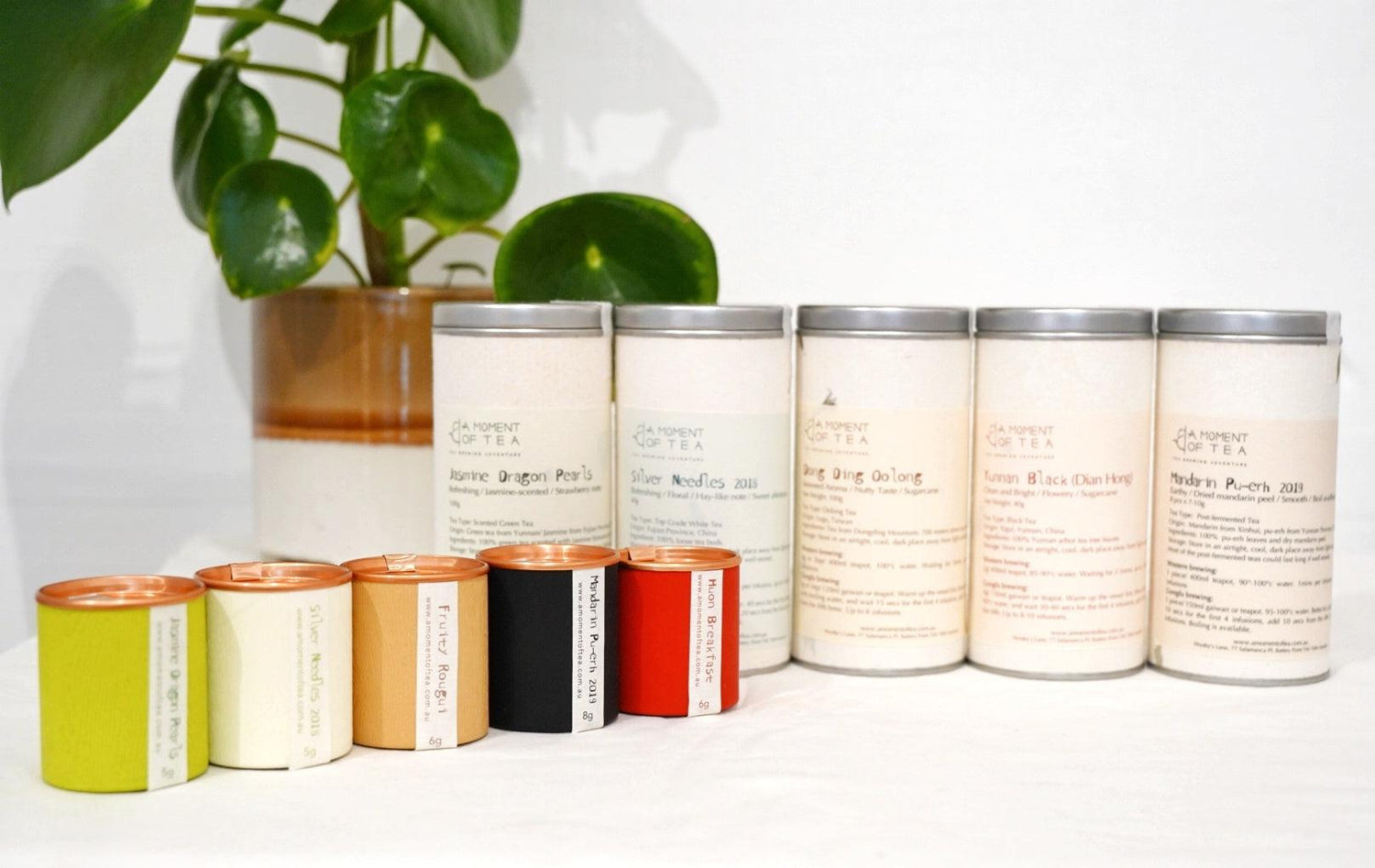
Silver Needles (Bai Hao Yin Zhen) is made only from unopened buds covered in silvery-white down. It's the most delicate white tea — light, naturally sweet, with a floral note and a hay-like quality in the background. Our Silver Needles comes from Panxi town in Fuding. I find the sweetness builds through a gongfu session — the fifth and sixth steeps are often my favourites.

White Peony (Bai Mu Dan) includes both buds and the first two leaves. This creates a fuller flavour — still floral, but with more body. Our Wild White Peony 2025 has an unusually high bud ratio, which gives it a brighter, sweeter character. One of our regulars, Zoe, is on her third pack — she drinks it daily.

Gong Mei (Tribute Eyebrow) and Shou Mei (Longevity Eyebrow) use slightly more mature leaves, which gives them a fuller body and a brisk, hay-like character. These are the most approachable white teas for everyday drinking. A customer named Liam bought our Gong Mei as his first white tea and described it as making him feel like "laying on a grass field on a sunny day." I thought that captured it well.

What does white tea taste like?
It depends on the grade and age. Fresh Silver Needles tastes light, sweet and floral — almost like drinking spring air. White Peony has more substance, with vegetal notes alongside the sweetness. Gong Mei and Shou Mei are brisk and hay-like, closer to what you'd expect from an everyday tea.
Aged white tea is a different experience entirely. Our 2012 Aged White Tea has spent twelve years developing herbaceous notes and a honey-like sweetness. It brews a warm amber instead of pale gold. The fresh, delicate qualities of young white tea evolve into something deeper — more settled, more rounded.

What fascinates me about our collection is the range of time it covers. We have teas from as far back as our 2008 Wild Aged White Tea, all the way to fresh 2025 harvests. Each one tells you something different about what patience does to tea leaves.
How does ageing change white tea?
There's a Chinese saying about white tea: 一年茶,三年药,七年宝 — "one year it's tea, three years it's medicine, seven years it's treasure." I used to think that was poetic exaggeration. After tasting the difference between our 2025 White Peony and our 2008 cake, I don't anymore.
Young white tea is floral and delicate. After a few years, herbaceous qualities start to emerge. Past seven years, the sweetness shifts from light and floral to something closer to honey or dried dates. The body fills out. The whole character becomes warmer.

One of our customers, Miguel, was sceptical when our staff at Salamanca Market suggested boiling his aged white tea leaves after a few infusions. He tried it anyway and was surprised by a pronounced Chinese dry date flavour. That boiling method is something I recommend with all our aged whites — it draws out a layer of sweetness that normal steeping can't reach.
Our aged white tea is my go-to for chatting or just relaxing. Noelle, one of our repeat customers, told us she keeps coming back because "every cup is consistent in its honeyed sweetness." That reliability is one of the things I appreciate about well-stored aged white tea.
The natural blends
Two of our white teas show how natural ingredients can add to white tea's character without masking it.
Our Rose Mandarin White combines 2012 aged white tea with mandarin peels aged since 2016 (Xinhui chen pi) and rose petals. The citrus from the aged mandarin peels brings warmth, while the rose adds a gentle floral touch. The white tea holds everything together.

Our Gardenia White Tea pairs White Peony with whole dried gardenia flowers. The gardenia adds fragrance without taking over — the white tea stays in charge. Both are natural blends: no artificial flavours, colours or preservatives.

Does white tea have caffeine?
Yes, but generally less than green or black tea. White tea contains caffeine because it comes from the same plant, but the minimal processing and the type of leaves used tend to result in lower caffeine levels.
Aged white teas seem even gentler on caffeine. Alex, one of our customers, told us he drinks our 2012 Aged White Tea after dinner and it doesn't interfere with his sleep. I find the same — aged whites work well as evening teas.
The one thing white tea does have in high amounts is L-theanine, an amino acid often associated with calm focus. It's why I reach for white tea when I'm writing or need to concentrate. You get a feeling I'd describe as "alert relaxation" — clear and present, but not wired. Several customers have told us they've noticed the same thing.
How terroir matters
Most of our white teas come from Fujian, but our Yunnan White Tea 2021 shows how growing environment changes everything. It comes from wild arbor trees in Xigui — ancient trees with deep root systems. The result is citrus and woody notes with mint undertones that you won't find in Fujian whites. The honey sweetness is more pronounced, and the tea handles higher brewing temperatures well.

Racheal from Adelaide tried a sample when she was visiting Hobart and had to reorder online — she told us it's become one of her favourites. That's the thing with Yunnan white tea: it's different enough from the Fujian style that people remember it.
Tips from our Tea Bar
After years of brewing white tea for customers at our Salamanca Tea Bar, here's what I've learned:
Water temperature matters more than steep time. 90-95C works for most white teas. Silver Needles can go up to 95C despite what some guides say — the buds can handle it, and the heat brings out more sweetness.
Aged white teas benefit from the boiling method. After 3-4 gongfu infusions, transfer the wet leaves to a kettle and boil for a few minutes. The flavour that comes out is noticeably different from steeping.
A glass teapot works well for Gong Mei and Shou Mei — you can watch the leaves unfurl, which is part of the experience. For Silver Needles and White Peony, a gaiwan gives you more control over each infusion.
If you're not sure where to start, Gong Mei is my standard recommendation. It's less delicate than Silver Needles and less complex than aged white tea — just a clean, naturally sweet cup that works for most occasions.
Choosing your white tea
For focus and calm: Wild White Peony 2025 ($29) or Silver Needles (from $11). High L-theanine content for that calm, clear headspace.
For a gentle introduction: Gong Mei 2020 ($20) or White Nectar 2023 ($19). Approachable, affordable, easy to brew.
For depth and complexity: Aged White Tea 2012 ($35) or Wild Aged 2008 ($230). Rich, herbaceous, rewarding with the boiled method.
For floral character: Gardenia White Tea ($25) or Rose Mandarin White ($35). Natural blends that add without masking.
If you're in Hobart, come to our Tea Bar at Salamanca Art Centre and try a few. It's the easiest way to find out which white tea suits you.
Frequently asked questions
What is white tea?
White tea is a lightly processed tea from the Camellia sinensis plant. The leaves are withered and dried naturally with minimal oxidation. Most white tea comes from Fujian Province, China.
Does white tea have caffeine?
Yes, but typically less than green or black tea. Aged white teas tend to have even less. Most white teas work well as afternoon or evening drinks.
What does white tea taste like?
It varies by grade. Silver Needles is light and sweet with floral notes. White Peony is fuller with vegetal qualities. Gong Mei and Shou Mei are brisk and hay-like. Aged white teas develop herbaceous notes and honey sweetness.
How should I brew white tea?
Use 90-95C water. For western brewing, steep 3 minutes with 1.5g per 250ml. For gongfu, use 3-5g per 150ml and steep 30-40 seconds. White tea usually handles 6-10 infusions.
Can white tea be aged?
Yes. White tea is one of the few tea types that improves with age when stored properly. The flavour shifts from light and floral to herbaceous and honey-sweet over years of natural ageing.
Written by Joanne Gao, co-founder of A Moment of Tea and tea specialist trained at Lian Yu Tea School since 2014. Joanne sources and selects all teas for A Moment of Tea from her direct relationships with tea farmers in China.
[Published: March 2026] [Last updated: July 2026]
If you're in Hobart, drop by our Salamanca Tea Bar — we'll brew whatever interests you, no pressure to buy. You'll also find us at Salamanca Market every Saturday morning.