Teas for Morning, Afternoon and Evening

Matching tea to the time of day
Different teas have different caffeine levels, flavours, and brewing styles. A strong black tea or matcha often suits the morning. Oolong or scented green tea can work well in the afternoon. For evenings, many people prefer low-caffeine or caffeine-free options.
This guide matches our teas to three parts of the day, based on caffeine content and the kind of cup each tea offers.
Morning — higher-caffeine teas
Morning is usually the best time for higher-caffeine teas. These are the teas with more body, stronger flavour, and enough caffeine to replace a coffee for some people. Browse our full morning tea picks.
Our morning tea picks
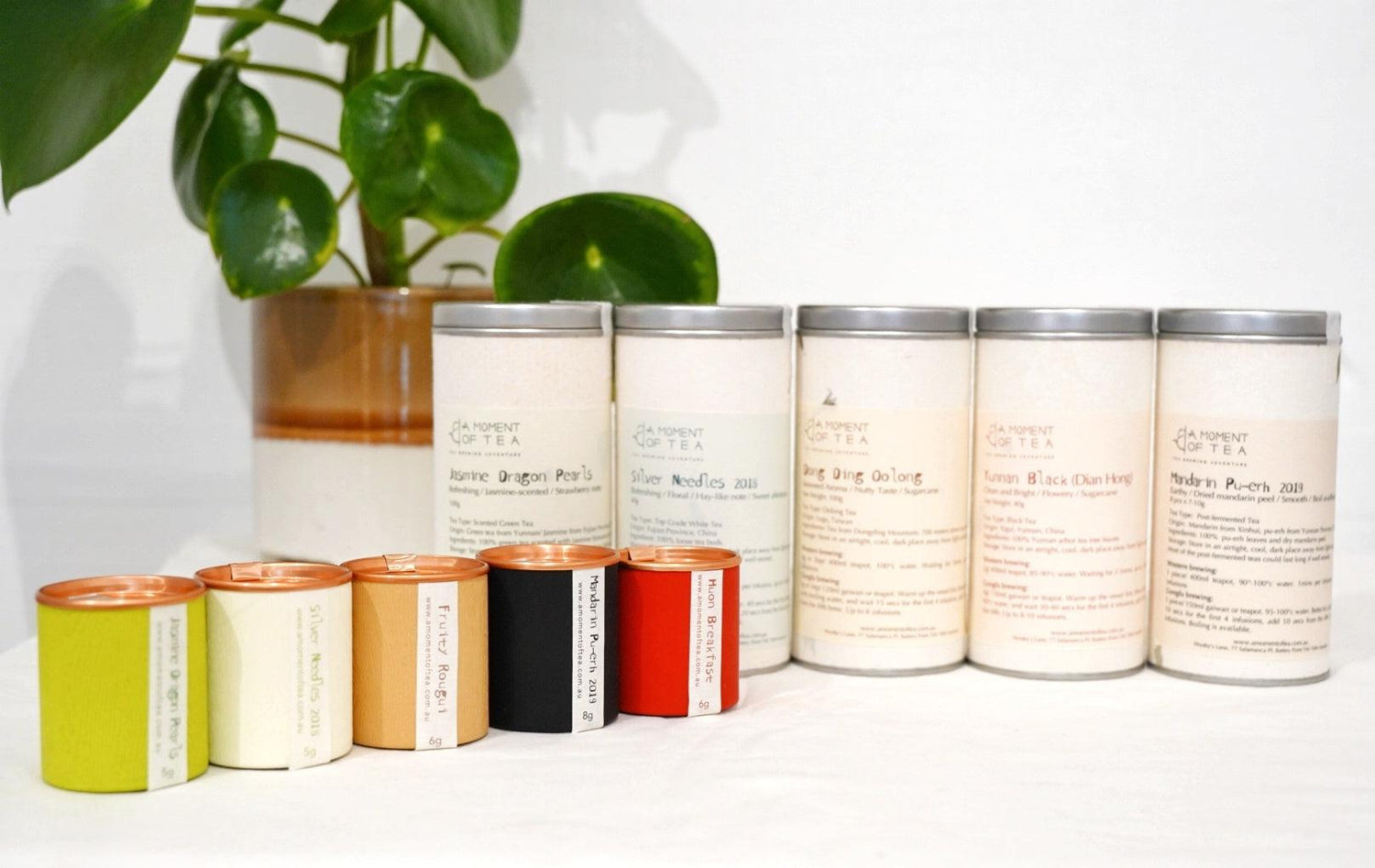
Yunnan Black Tea (Dian Hong) — Malty and rich, with chocolate notes. From Yunnan's Xigui area. If you drink English Breakfast, this is a natural step into Chinese black tea. From $8.
Tasmanian Breakfast Blended Black Tea — Our take on a morning black tea, blended with Tasmanian ingredients. From $7.
Lapsang Souchong — Pine-smoked black tea from Wuyi Mountains. Smoky, creamy, and honey-sweet. A favourite among whisky drinkers. From $10.

Afternoon — medium-caffeine teas
Afternoon is medium-caffeine territory. Oolongs and scented green teas give you flavour and aroma without the heavier feel of black tea. See our afternoon collection.
Our afternoon tea picks
Jasmine Dragon Pearls — Hand-rolled green tea scented with fresh jasmine blossoms. Floral, smooth, and refreshing. From $8.
Osmanthus Green Tea — Lighter and more subtle than jasmine, with a peach-like sweetness from osmanthus flowers blended with organic Maofeng green tea. From $5.
Dong Ding Oolong — Medium-roasted Taiwanese oolong with nutty, sugarcane-sweet character. From $10.

Evening — low-caffeine and caffeine-free teas
After the middle of the afternoon, caffeine-sensitive drinkers often switch to low-caffeine or caffeine-free teas. Caffeine affects people differently, so your own cut-off time may be earlier or later. See our evening tea collection.

Low caffeine
Tasmanian Lavender Puerh — Silver Medal at the 2025 Royal Tasmanian Fine Food Awards. Menghai ripe pu-erh blended with Tasmanian lavender. Earthy, smooth, floral, and lower in caffeine. From $7.
Aged White Tea 2012 — A decade of ageing has given this white tea a honey depth and a smooth, mellow character. White tea is generally lower in caffeine than green, oolong, or black tea. From $8.
Caffeine-free
Sweet Rose Dew — Pure rose petal tea with a honey-like natural sweetness. Caffeine-free. From $8.
Osmanthus Flower Tea — Freeze-dried golden flowers with an apricot-honey fragrance. Caffeine-free. From $5.
Blooming Flower Tea — Hand-tied tea balls that unfurl into flowers in hot water. The pure blossom varieties are caffeine-free; the tea-with-flower varieties are light caffeine. From $7.


Want to try a few evening options? Our Evening Sample Pack includes four evening-friendly teas.
The quick reference
Before 12pm: Black tea, matcha, gyokuro — high caffeine collection
12pm-3pm: Oolong, jasmine, osmanthus green — medium caffeine collection
3pm-6pm: White tea, ripe pu-erh — low caffeine collection
After 6pm: Rose, osmanthus, pure blossom blooming tea — caffeine-free collection
For the full breakdown of caffeine in each tea type, see our Tea Caffeine Guide.
Joanne's notes
At our Tea Bar, I often ask people what time of day they usually drink tea. It's the fastest way to narrow down what will suit them. Morning drinkers tend to want something bold, so I point them to Yunnan Black or Lapsang. Afternoon drinkers usually want something lighter, and Jasmine Dragon Pearls is one I reach for often. For evening cups, I usually ask: do they want low caffeine, or none at all?
If you want to experiment across the range, our sampler packs let you try teas from different caffeine levels without committing to full packets.
Common questions
Which teas have the most caffeine?
Black tea, matcha, gyokuro, and young raw pu-erh are usually higher in caffeine than white tea, ripe pu-erh, or flower tisanes. The exact number depends on leaf amount, water temperature, and steep time.
What tea should I drink after dinner?
If you want no caffeine, choose a caffeine-free option like Sweet Rose Dew or Osmanthus Flower Tea. If you prefer something that tastes more like traditional tea, Tasmanian Lavender Puerh is a lower-caffeine option.
Can I drink green tea in the evening?
Green tea usually contains caffeine. If you're sensitive to caffeine, switch to low-caffeine or caffeine-free options after mid-afternoon, or try green tea earlier in the day.
Last updated: July 2026
If you're in Hobart, drop by our Salamanca Tea Bar — we'll brew whatever interests you, no pressure to buy. You'll also find us at Salamanca Market every Saturday morning.