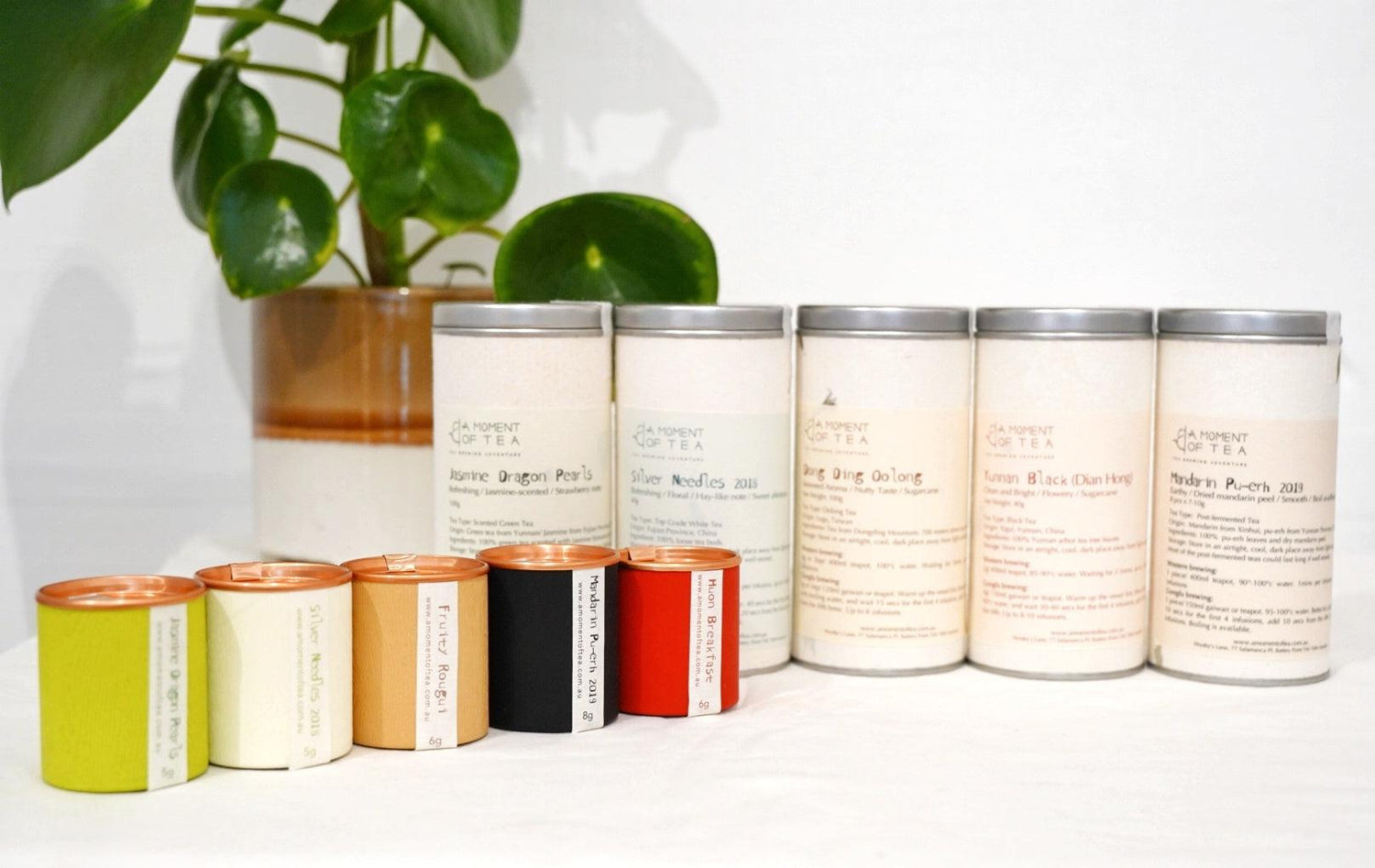

How to taste tea: a sensory guide
You know how biting into a ripe peach is nothing like eating canned peach slices? The fresh fruit has layers — skin that's slightly tart, flesh that's sweet and dripping, a stone that smells faintly of almonds. Drinking tea works the same way. A tea bag gives you one flat note. A well-brewed loose leaf tea gives you a whole sequence of flavours that shift from the first sip to the aftertaste lingering in your throat minutes later.
Tea tasting is the practice of using your senses — sight, smell, taste and touch — to observe and appreciate the flavours, aromas and textures in a cup of tea. In Chinese tea culture, tasting is called 品饮 (pǐnyǐn), which means to savour slowly and mindfully, rather than simply drinking to quench thirst. Anyone can learn to taste tea. It takes no special equipment and no training. All you need is a cup, some attention, and a willingness to slow down.

The four senses of tea tasting
Professional tea tasters in China evaluate tea through four stages: look, smell, sip, feel. You can do the same at your kitchen table.
Sight (观色, guān sè). Before you drink, look at the brewed tea in your cup. The colour tells you a lot. A pale straw-yellow suggests a lightly processed tea like white tea or green tea. A golden amber points toward oolong (乌龙茶, wūlóng chá — literally "dark dragon") or aged white tea. A deep reddish-brown signals black tea — called red tea (红茶, hóngchá) in China because of its reddish brew colour — or a ripe pu-erh (熟普, shú pǔ). Clarity matters too. A clear, bright liquor usually indicates careful processing. Cloudiness can mean the leaves were bruised roughly or that the tea was over-steeped.
Smell (闻香, wén xiāng). This is where things get interesting. Bring the cup close to your nose while the tea is still hot. The first wave of scent — called the top note — fades quickly. Wait a moment, then smell again. The middle notes come through differently, often more complex. In a Gongfu-style tasting, there's a special tall, narrow cup called an aroma cup (闻香杯, wénxiāng bēi) used just for this purpose: you pour the tea out, then hold the empty warm cup to your nose and breathe in.
Emily, a customer who ordered our Jasmine Dragon Pearls, described it this way: "The aroma is like a bouquet of flowers, and the taste has a hint of strawberry." Tea aroma really is that varied. A green tea might smell like fresh-cut grass or steamed vegetables. A roasted oolong can smell like toasted walnuts. An aged pu-erh might remind you of damp forest floor after rain. Our guide to tea aroma walks through the five scent families one by one.
Taste (品味, pǐn wèi). Take a small sip and let it spread across your whole tongue. Different areas of your tongue respond to different tastes — sweetness at the tip, bitterness at the back. Good tea often has a gentle bitterness upfront that fades into sweetness. This is called 回甘 (huígān), which translates as "returning sweetness" or sweet aftertaste. It's one of the most prized qualities in Chinese tea. Another sign of a well-made tea is 生津 (shēngjīn) — the sensation of your mouth producing saliva after swallowing, a sign that the tea is stimulating and alive.
Mouthfeel (口感, kǒugǎn). This is about texture, not flavour. Is the tea thin and watery, or does it feel thick and coating? Does it feel silky, or slightly rough and astringent? Some aged teas have what Chinese tea people call 喉韵 (hóuyùn) — a resonance or echo that sits in your throat after swallowing. When you drink a tea and still feel its presence in your throat thirty seconds later, that's hóuyùn. This quality is especially valued in Wuyi rock oolongs and aged pu-erh teas.

The tea flavour spectrum: from green to dark
One of the most useful concepts in tea tasting is the scent and flavour spectrum. The level of oxidation a tea undergoes during processing directly shapes its aroma and taste. Think of it like cooking an onion: raw onion is sharp and pungent; lightly sautéed onion turns sweet and translucent; caramelised onion becomes deep, rich and almost smoky. Tea leaves go through a similar transformation.
Here's how the spectrum maps across the six major tea types, from least processed to most:
| Tea type | Oxidation | Scent type | Typical flavours | Example |
|---|---|---|---|---|
| Green (绿茶, lǜchá) | 0–5% | Vegetal (菜香型) | Fresh grass, steamed greens, chestnut, seaweed | Osmanthus Green Tea |
| White (白茶, báichá) | 5–10% | Delicate floral | Honey, hay, light flowers, melon | Silver Needles White Tea |
| Yellow (黄茶, huángchá) | 5–15% | Nutty (坚果香型) | Toasted grain, sweet corn, soft nuttiness | Jun Shan Yin Zhen |
| Oolong (乌龙茶, wūlóng chá) | 15–85% | Floral to ripe fruit (花香型 → 熟果香型) | Orchid, gardenia, roasted walnut, stone fruit, cream | Alishan High Mountain Oolong / Big Red Robe |
| Red / Black (红茶, hóngchá) | 85–100% | Candy (糖香型) | Chocolate, honey, malt, dried lychee, brown sugar | Lapsang Souchong Original Smoked |
| Dark / Post-fermented (黑茶, hēichá) | Microbial fermentation | Aged (陈香) | Wet earth, mushroom, dried dates, wood, leather | Ripe Pu-erh / Tasmanian Lavender Puerh |
The principle behind this spectrum comes from tea processing science: the less oxidation, the closer a tea's flavour stays to the raw leaf — vegetal, grassy, close to nature. The more oxidation (or fermentation, in the case of dark tea), the further it moves from that starting point, toward ripe fruit, candy, and earthy depth. Chinese tea tasters describe this shift as moving from 清扬 (qīngyáng, "light and lifting") flavours toward 低沉 (dīchén, "deep and heavy") ones.
Angus, a customer who tried our Aged Mandarin Peel, captured this kind of surprise well: "I expected fresh mandarin but instead was surprised by waves of complexity — love at first sip." That shift from expectation to discovery is what makes tea tasting worth doing slowly.
Roasting adds another dimension. An unroasted oolong tastes more like a stir-fried vegetable — bright and green. A heavily roasted oolong tastes more like a slow-braised dish — deep, warm, and layered. I think of roasted Dong Ding Oolong the way I think of caramelised butter: you start with something mild, and heat turns it into something with much more depth.

How to practise tea tasting at home (or at our Tea Bar)
You don't need a professional cupping set to start tasting more carefully. Here are some ways I'd suggest beginning:
Start with a side-by-side comparison. Pick two teas from different categories — say, a green tea and an oolong — and brew them at the same time. Smell each one, sip each one, and notice the differences. Comparison is the fastest way to train your senses. When I first started learning at Lian Yu Tea School in Beijing in 2014, side-by-side tasting was how we spent most of our time.
Taste the same tea across multiple steeps. If you're brewing Gongfu-style (功夫泡, gōngfū pào) with a gaiwan (盖碗, gàiwǎn) or small teapot, pay attention to how the flavour changes from the first infusion to the fifth. The first steep is often lighter. The second and third tend to be the fullest. By the fourth or fifth, different notes appear — sometimes sweeter, sometimes more mineral. This is one of the things I enjoy most about Gongfu-style brewing: the same leaves tell a different story with each pour.
Smell the lid. If you're using a gaiwan, lift the lid after pouring and smell the underside while it's still warm. The scent trapped under the lid is often different from what's in the cup — sometimes more floral, sometimes more toasty. This is a quick trick that gives you extra information about a tea's character.
Look at the spent leaves. After your last steep, tip the leaves onto a plate. Are they whole or broken? What colour are they? Uniform or mixed? In Chinese tea evaluation, examining the spent leaves (观叶底, guān yèdǐ) is the final step, because the leaves reveal details about harvesting and processing that you can't taste directly. Whole, evenly coloured leaves usually indicate careful hand-picking and processing.
Write it down. Keep a short note for each tea you try. Even a few words — "nutty, thick, sweet finish" or "grassy, thin, slightly bitter" — will help you build a personal vocabulary over time. There is no wrong answer. Your palate is yours.
If you'd like to try this guided, our Tea Bar at Salamanca Art Centre (77 Salamanca Place, Hobart) is open Tuesday to Sunday. We offer an "A Moment of Tasting" experience where you can sit down, taste several teas side by side, and learn how to identify what you're tasting. I'll walk you through the steps — no prior knowledge required.

What does "good tea" taste like?
There's no single answer. A good tea is one that's well-made for its type. A green tea should taste fresh and clean, not dull or stale. An oolong should have layered flavour that changes as you steep it. A pu-erh should feel smooth and full-bodied, not harsh. The best way to recognise quality is to taste a lot of tea and notice the range within each category. For the longer answer, see our guide to tea quality.
Do I need special teaware to taste tea properly?
No. A plain white porcelain cup works well because it lets you see the colour of the liquor clearly. A gaiwan is ideal for Gongfu-style tasting because you can control steep times precisely and smell the lid. But a mug and a strainer will work fine — the most important tool is your attention.
Why does my green tea taste bitter?
Water temperature is usually the cause. Green tea leaves are delicate, and boiling water (100°C) will scorch them, releasing excess bitterness. Try brewing at 70–80°C instead. Steeping time matters too — keeping green tea in the water too long increases astringency. A shorter steep at a lower temperature will bring out the sweetness and vegetal flavour without the harsh edge.
What is huigan and how do I notice it?
Huigan (回甘) is the sweet aftertaste that appears after you swallow. It's easiest to notice with oolong teas and pu-erh. Take a sip, swallow, then wait about ten seconds. If your throat and the back of your mouth feel sweeter than during the sip itself, that's huigan. Some teas have strong huigan that lasts for several minutes. It's a quality that experienced tea drinkers actively look for. We wrote a full guide to understanding huigan.
Can I taste tea like this with tea bags?
It's harder. Most tea bags contain finely cut leaves or dust (红碎茶, hóngsuìchá — CTC-processed tea), which release flavour very quickly in one burst. Loose leaf tea releases its compounds more gradually, especially when brewed Gongfu-style over multiple infusions. That gradual release is what creates the layered experience of tasting different notes across steeps. If you're curious about the difference, try our Gong Mei White Tea 2020 as a gentle starting point.
Teas mentioned in this article
- Osmanthus Green Tea
- Silver Needles White Tea
- Alishan High Mountain Oolong
- Big Red Robe Oolong
- Dong Ding Oolong
- Lapsang Souchong Original Smoked
- Tasmanian Lavender Puerh
- Jasmine Dragon Pearls
- Aged White Tea 2012
- Gong Mei White Tea 2020
- Aged Mandarin Peel (Chen Pi)
- Foshou Set Glazed Gaiwan — for Gongfu-style tasting
- A Moment of Tasting — our guided tasting experience
Published: March 2026 | Last updated: July 2026