



Tasmanian Lavender Puerh
Tasmanian Lavender Puerh
Couldn't load pickup availability
Tasmanian Lavender Puerh is a blended ripe pu-erh tea from Menghai, Yunnan, paired with dried lavender grown in Tasmania. It combines the smooth, earthy depth of Chinese shou pu-erh with a gentle floral aroma, making it a low-caffeine afternoon or evening tea with a strong Tasmanian identity.
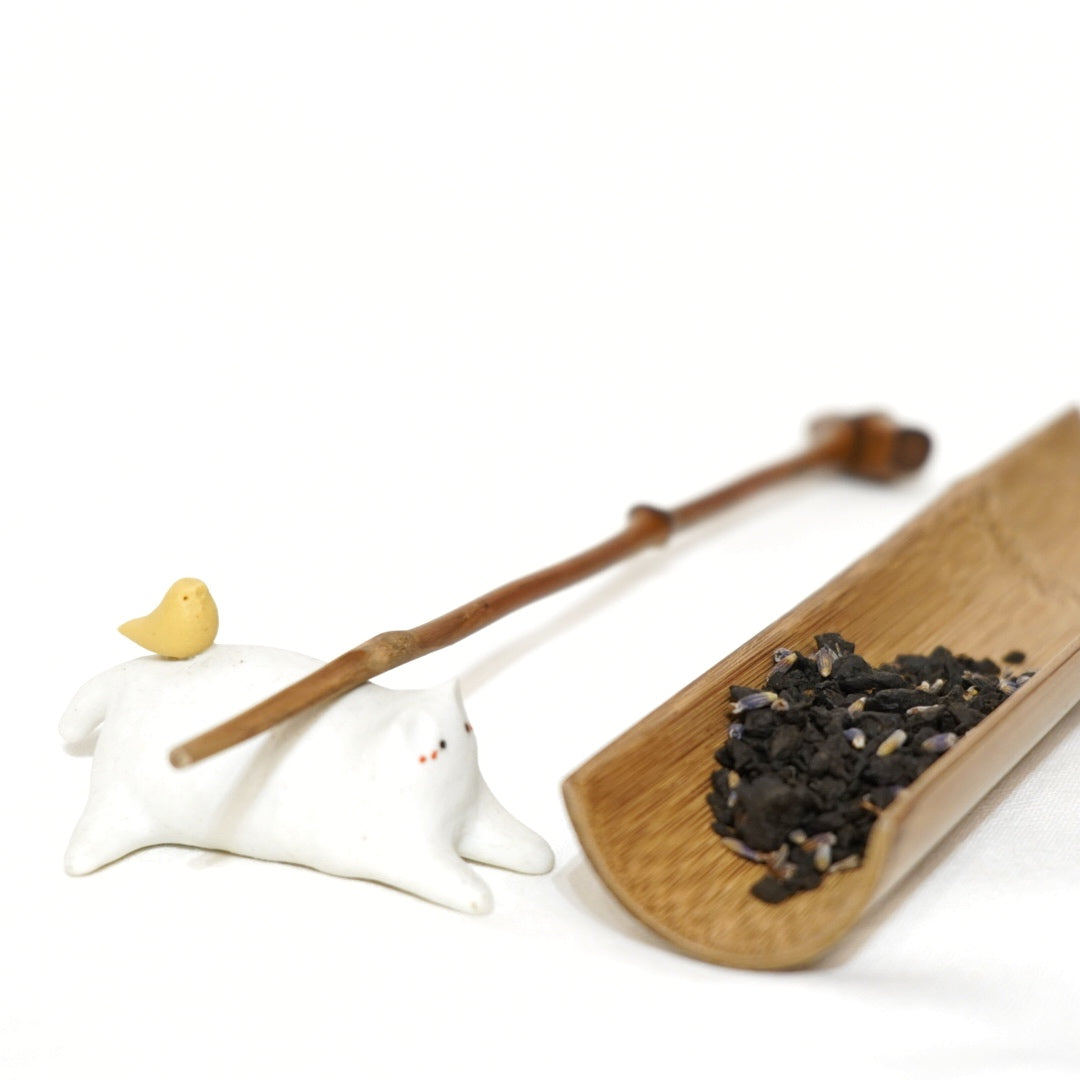
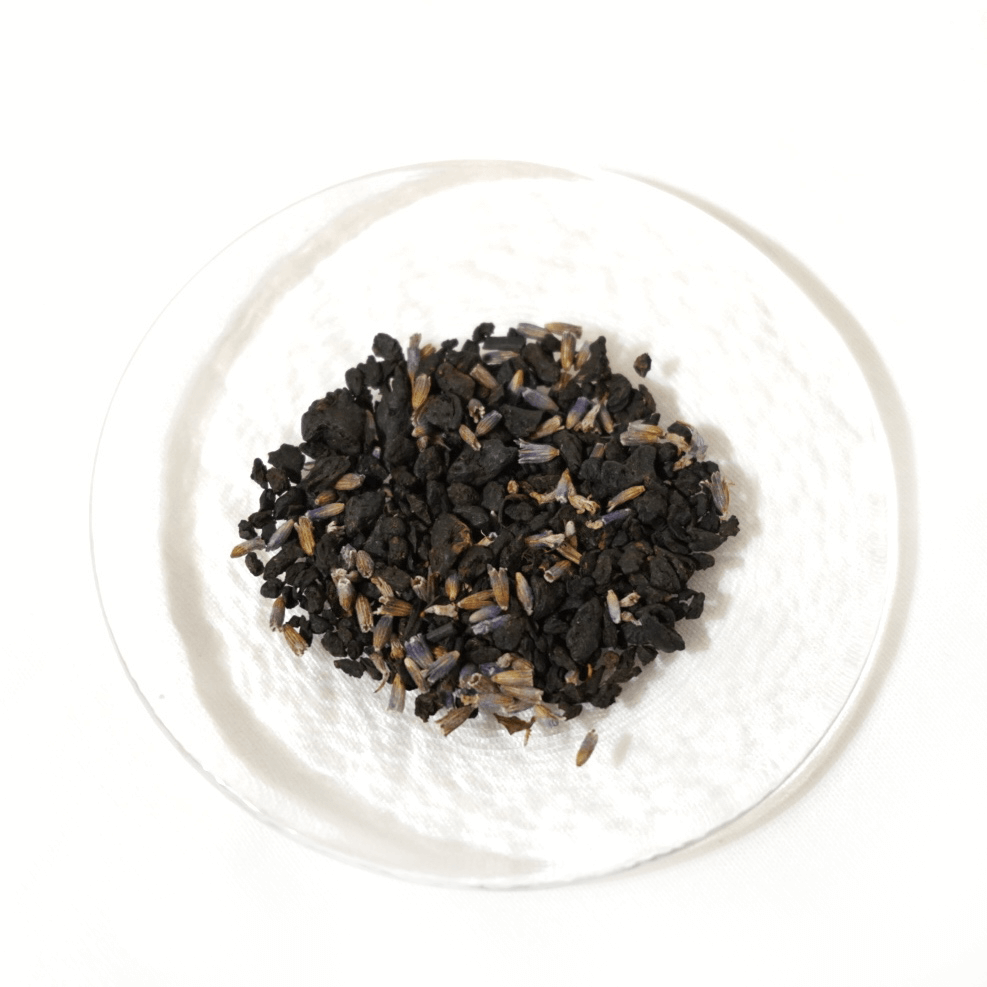
Tasmanian Lavender Puerh received a Silver Medal at the 2025 Royal Tasmanian Fine Food Awards. Menghai ripe (shou) pu-erh nuggets wrapped with Tasmanian-grown dried lavender flowers — blended in Hobart.
What you'll taste
Three things show up in every cup, and they're what bring most people back:
Mellow-rich . The ripe pu-erh base has a full, round body — not thin or watery, not sharp or astringent. You feel it settle across the palate rather than sitting on the tongue.
Silky . A proper ripe pu-erh from Menghai pours smooth. There's a soft, almost creamy texture to the liquor — no rough edges even at longer steeps.
Glutinous rice aroma . This is the one that surprises people. Underneath the lavender, there's a warm, sweet, cooked-rice note that develops with each infusion. It's a naturally-occurring aroma in well-made Menghai shou — nothing added.
The Tasmanian lavender sits gently on top of all this, not over the top. Floral teas often fight the tea base; this one lets the pu-erh do the talking, then finishes with lavender's soft floral note.
Why people come back for it — after-meal tradition
A lot of our regulars first bought this for the flavour and kept buying it as an after-meal tea. Ripe pu-erh is traditionally enjoyed after rich food in Chinese tea culture — the cup people reach for after a heavy dinner, hot pot, or a few too many dumplings.
The fermentation process (渥堆, wòduī) that creates ripe pu-erh gives the tea its smooth, mellow body and deep earthy profile. We're not making medical claims; we describe it this way because this is how many Chinese tea drinkers talk about ripe pu-erh as part of an after-dinner tea routine.
How this blend came to be
In China, ripe pu-erh and dried tangerine peel (chen pi) are often enjoyed together — a classic pairing I grew up with. When I moved to Tasmania, lavender was everywhere. Not just in gardens, but in honey, scones, soaps, even gin. So I tried it.
After months of testing different Tasmanian lavenders against different Yunnan pu-erhs, this combination stayed — Menghai ripe, for the glutinous-rice aroma and smooth body, with culinary-grade Tasmanian lavender that's bright but not soapy.
Low caffeine for afternoon and after-dinner cups
Ripe pu-erh is naturally lower in caffeine than green or black tea, and the fermentation reduces it further. Many customers choose this blend for afternoon or after-dinner drinking. If you're sensitive to caffeine, start with an afternoon cup to see how it sits with you.
Tea Profile
Taste Profile: Mellow / Glutinous rice aroma / Floral & earthy
Tea Type: Blended Post-fermented Tea (Menghai ripe pu-erh + Tasmanian lavender)
Origin: Menghai, Yunnan Province, China (pu-erh) + Tasmania (lavender)
Oxidation: Fully fermented (渥堆 wòduī process)
Traditional tea property: Warm in Chinese tea classification
Caffeine: Low; many customers choose it for afternoon or after-dinner cups
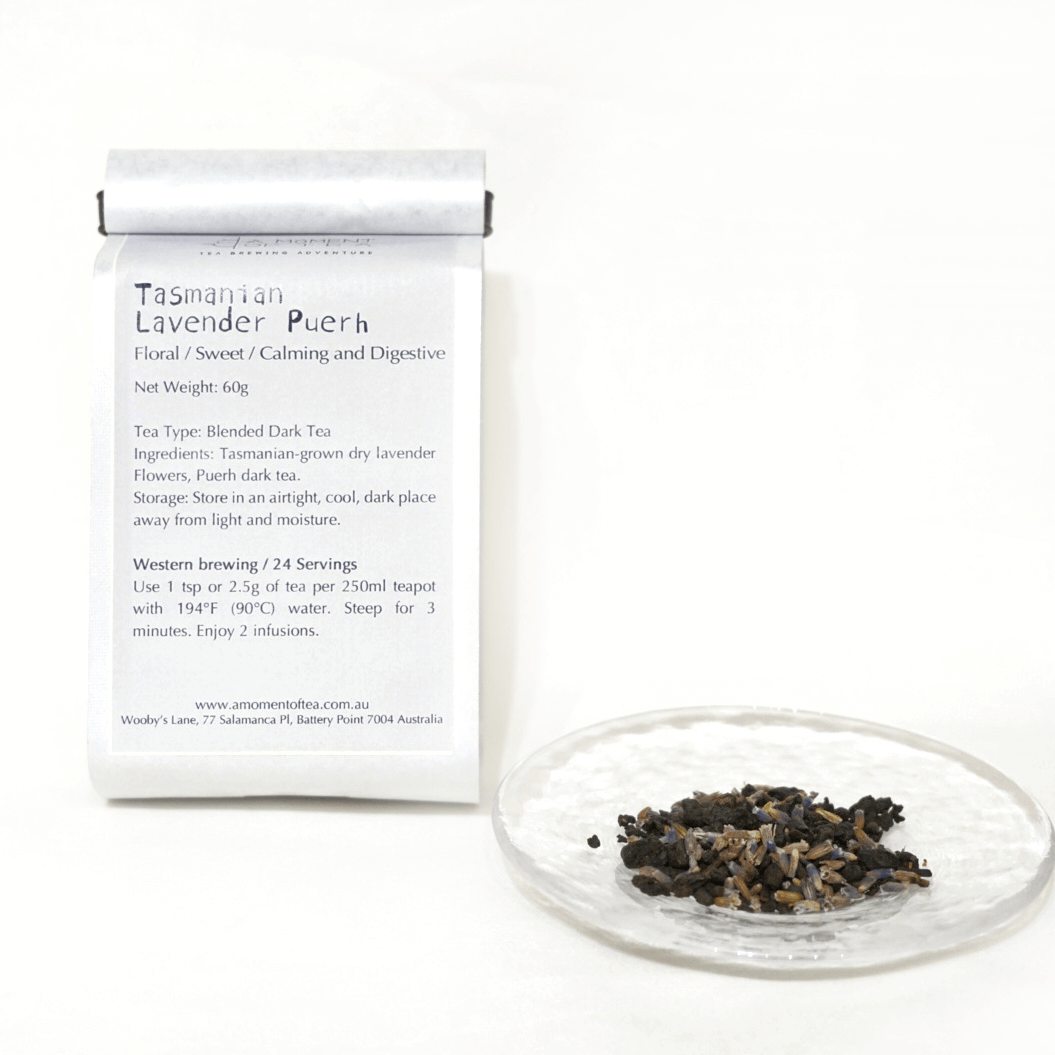
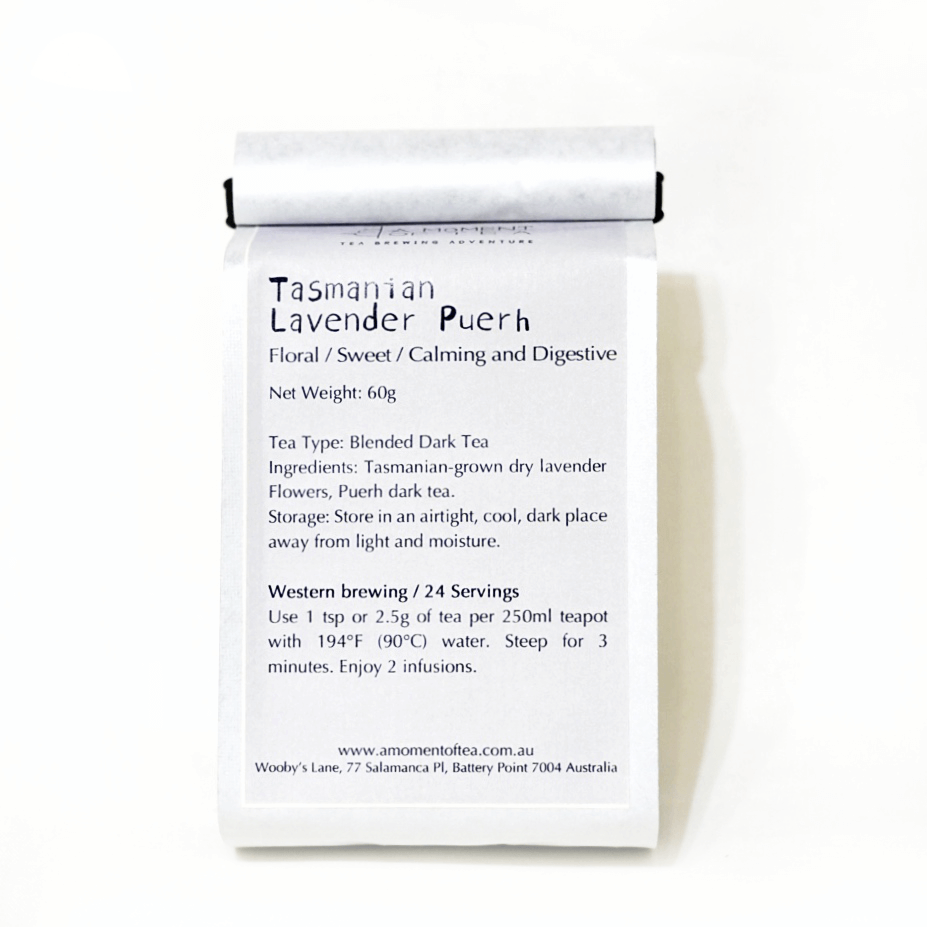
Ingredients: Tasmanian-grown dried lavender flowers, compressed ripe pu-erh nuggets from Menghai. No artificial flavouring.
Storage: Cool, dark, airtight. Away from strong odours.
Brewing Instructions
Western brewing:
Use 1 tsp or 2.5g per 250ml teapot with 95–100°C water. Steep for 3–5 minutes. Good for 2 infusions. The longer you steep, the smoother it gets.
Thermos steeping (our favourite way):
Use a 1:200 tea-to-water ratio. Add 4g (2 tsp) to 800–1000ml of boiling water in a good thermal flask and let it steep for an hour. Our 820ml Insulated Tea Flask with built-in infuser works well for this — set it up in the morning and sip through the day.
Gongfu brewing:
Use 5g per 150ml gaiwan. Pre-warm. 95°C water. 20 seconds for the first infusion, adding 10 seconds each brew. Up to 6 infusions.
Storage
Store in an airtight container in a cool, dark place away from light and moisture. Pu-erh ages well, so a bag that's sat in the cupboard for six months won't have lost anything — if anything, it'll have softened further.
If you like floral teas, have a look at our flower tea collection. If you want to go further into pu-erh, our Loose Leaf Ripe Pu-erh 2021 is a gentle next step once you're used to the style.
About A Moment of Tea
Visit Our Hobart Tea Bar: Find us at Salamanca Art Centre where we've been sharing tea culture since 2022.
Tea Experience: Joanne has spent over 10 years learning tea traditions - from Chinese gongfu brewing in Beijing to Japanese matcha ceremonies here in Hobart.
Local Recognition: Featured in The Mercury, ABC, SBS Chinese, and Tasmanian community publications for bringing authentic tea culture to our community.
Carefully Selected Teas & Teaware: We select Chinese, Japanese and Tasmanian teas, plus teaware that we personally use and enjoy.
Easy Returns: Something not quite right? Email us within 7 days and we'll make it right.
My absolute favourite tea—so beautiful, with such complex and rich flavours. For the second infusion, I’ve begun to cold brew it over night in the fridge and that brings out a lot of the more floral notes- i highly recommend, to make the most of this tea!!
This is seriously a lovely tea. Smooth flavour and no bitterness at all. I usually like milk with my tea but no problems without milk at all. Will definitely purchase again. Thanks
The tea I'm most drawn to everytime now.
I LOVE this tea!!!! And glad it now comes in an eco friendly can and not a plastic bag
My friend purchased this tea on a recent trip to Tasmania and had me try some. I purchased my own that very day. This tea is a hug in a cup. A tea for the soul. The lavender is not overpowring but is there enough to know it is a lavender tea. No matter how long you steep it for, it does not go bitter. My absolute favourite tea i have ever tried.
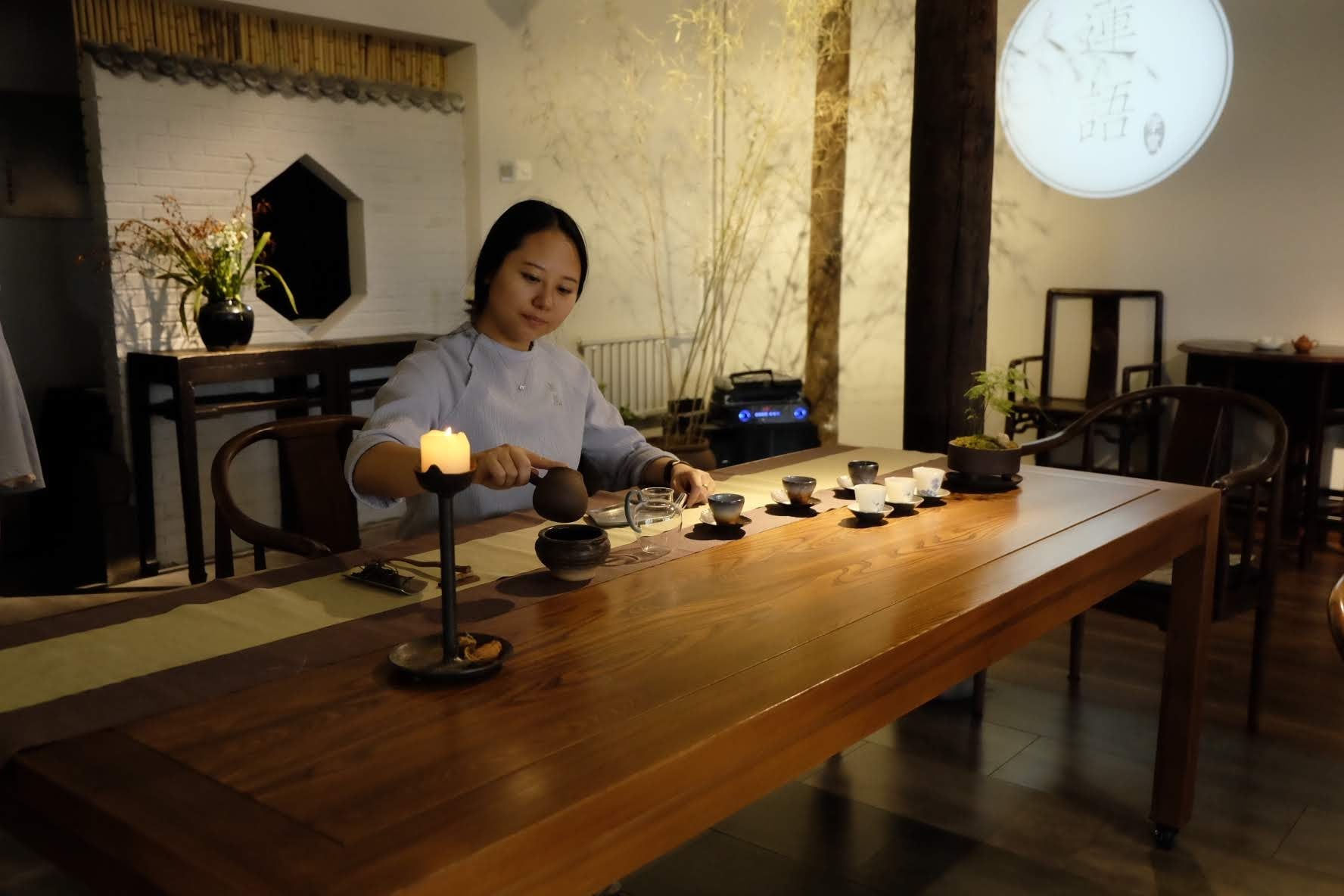
Visit Us in Salamanca, Hobart
Step into a world of flavour and experience tea like never before! Sample our finest teas, enjoy freshly brewed selections, and get personalised recommendations from our experts. Discover exclusive blends, special offers, and taste the difference!
Let customers speak for us
from 150 reviewsNice service and great tea! My experience of shopping was perfect, the pack was well!
A Moment of Tea have been wonderfully helpful educating me on the finer points of tea, and are supplying me with a lovely Ripe Puerh tea which I adore. Highly recommended, A Moment of Tea is my go to for fine tea.
My absolute favourite tea—so beautiful, with such complex and rich flavours. For the second infusion, I’ve begun to cold brew it over night in the fridge and that brings out a lot of the more floral notes- i highly recommend, to make the most of this tea!!
Great shop, excellent products and staff are fantastic
A truly lovely cup of tea
A lovely selection of teas. I have enjoyed them.
Good to start with if you haven't tried Puerh teas before.
Thank you.
Free Tea Samples
Love the tea❤️ 🫖
Ooh ! I am excited to try a range of new teas from the variety of starter packs I ordered. A great way to try new teas before buying bigger tins. Love, love a moment of tea. Beautiful teas for all occasions.
Each tea has been a revelation. Such inspiring company for work days. Thank-you.
Highly recommended cute tea pets! Puppy and kitty love them toooooooo!!!
Aged White Tea 2012 (Lao Bai Cha)
A good quality chen pi at a great price. Much better than the chen pi found in supermarkets.
I’m really enjoying this tea. Very smooth, an incredible tea to taste. Highly recommend. Will definitely repurchase and continue to try other teas you recommend. Thankyou
This is seriously a lovely tea. Smooth flavour and no bitterness at all. I usually like milk with my tea but no problems without milk at all. Will definitely purchase again. Thanks