Pu-erh tea
Pu-erh tea(普洱茶) is a post-fermented tea from Yunnan Province in southern China — the only region where authentic pu-erh is produced. Unlike other teas that are best consumed fresh, pu-erh is made to age. The leaves go through a microbial fermentation process that changes their chemical structure over time, developing earthy, smooth, and complex flavours that most other teas simply don't have.
Raw vs ripe: the two styles
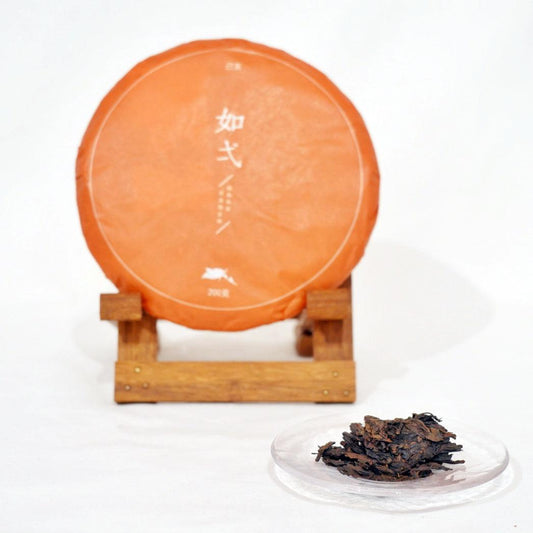
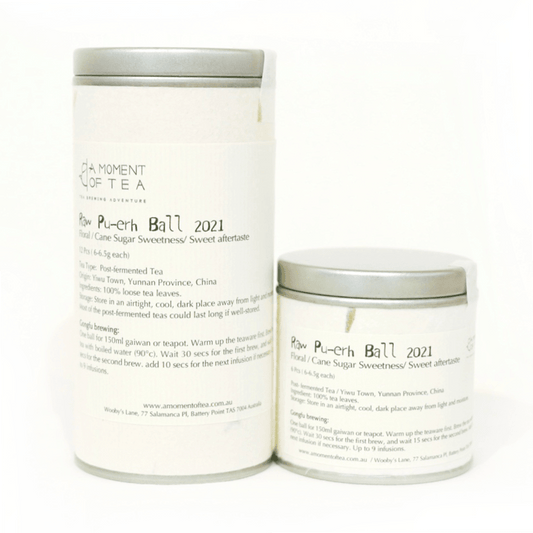
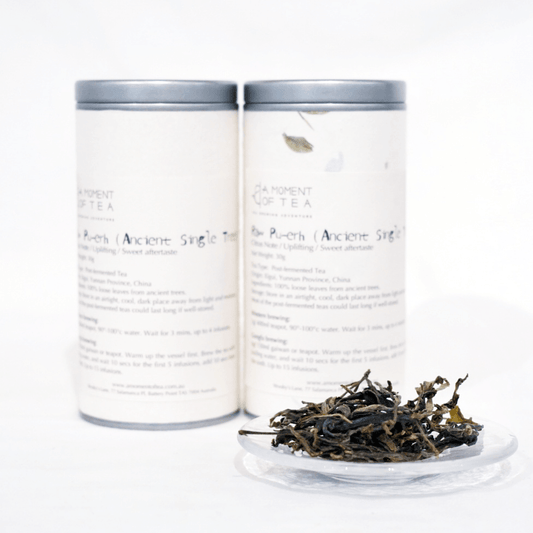
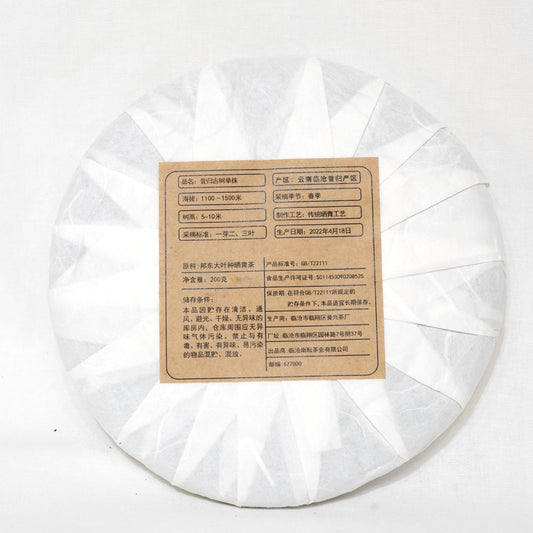
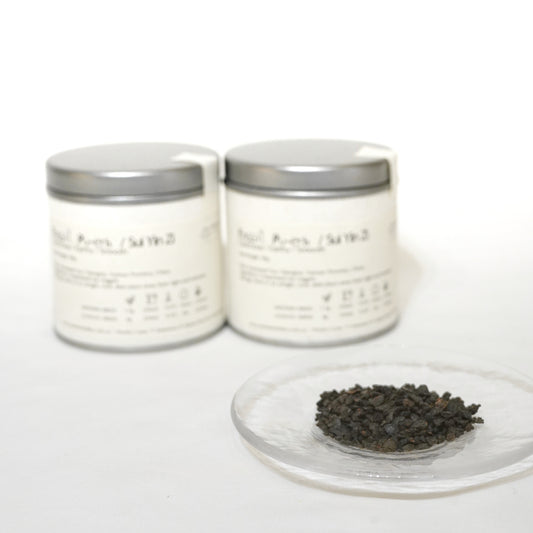
Pu-erh comes in two main styles. Raw (sheng) pu-erh is minimally processed — the leaves are sun-dried, lightly steamed, and compressed. It starts out bright and sometimes astringent, then mellows over years of natural aging. Our Raw Pu-erh Ball 2021 and Ancient Single Tree are both raw style — the Ancient Single Tree is also available as a 200g cake for those who want to age it at home. Ripe (shou) pu-erh goes through an accelerated fermentation process developed in the 1970s that gives it a deep, dark, earthy character from the start. Our Fossil Pu-erh, "Sweet Stock" Huang Pian Brick, and "The One" Ripe Cake are ripe style.
Pu-erh tea, caffeine and after-meal tradition
Pu-erh tea is traditionally enjoyed in China as an after-meal tea, especially after rich food. Its post-fermentation gives ripe pu-erh a smooth, earthy profile. Ripe pu-erh is generally lower in caffeine than raw pu-erh, so many customers choose it for afternoon and evening cups. Raw pu-erh tends to be higher in caffeine and more energising, so it usually suits mornings or early afternoons.
Where to start
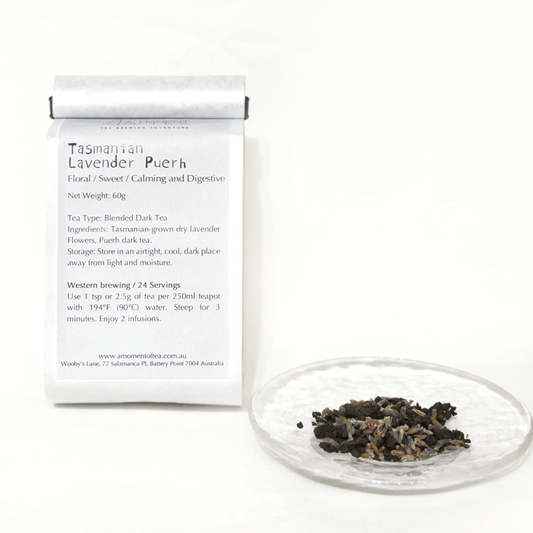
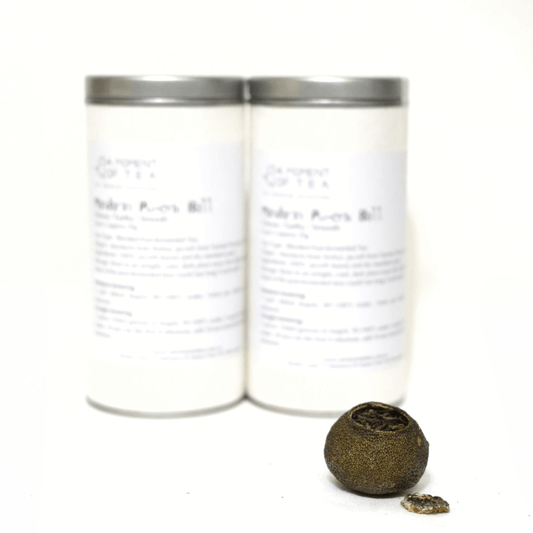
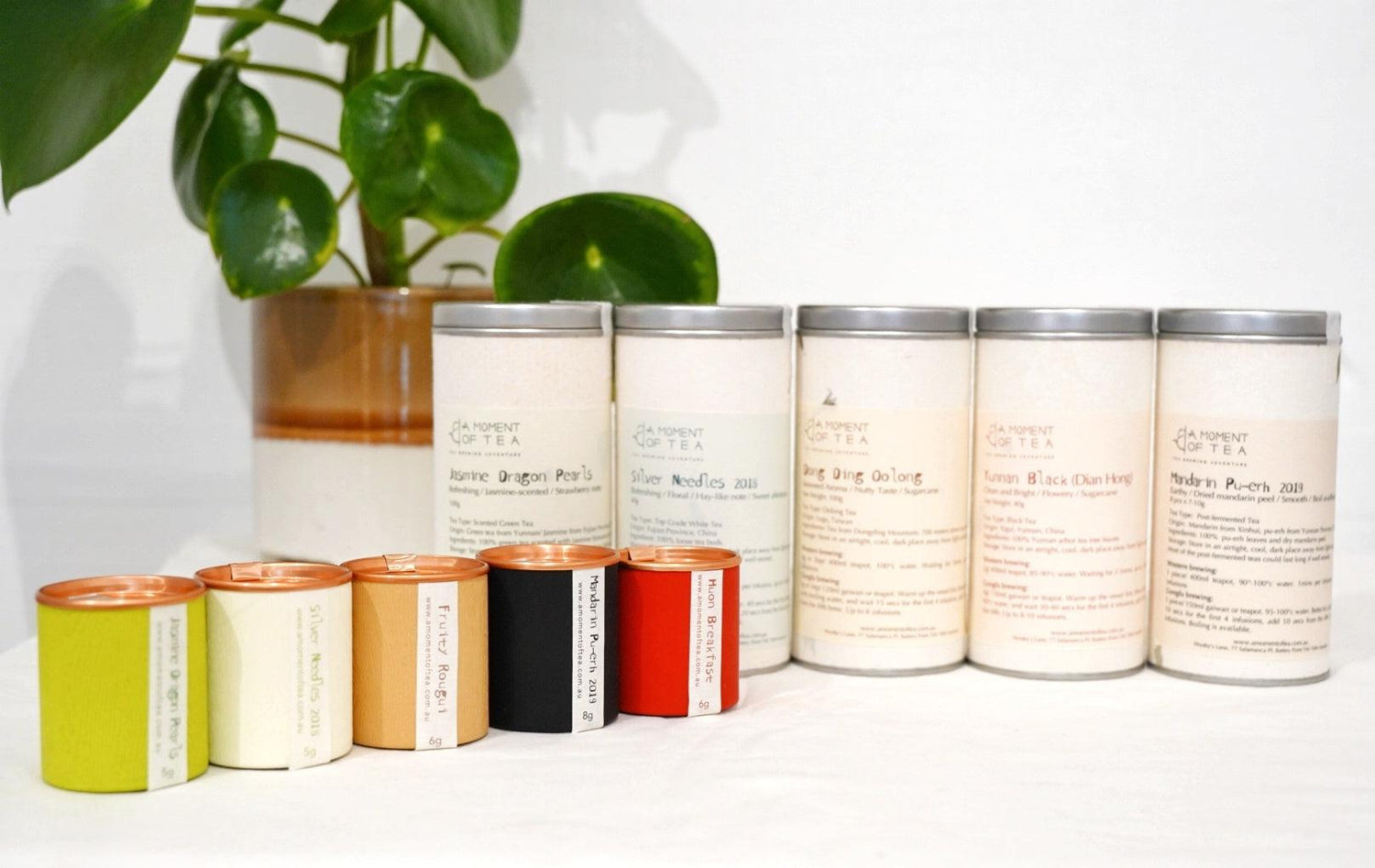
New to pu-erh? Our Tasmanian Lavender Puerh is a gentle starting point — it blends Menghai ripe pu-erh with Tasmanian lavender and was awarded at the 2025 Royal Tasmanian Fine Food Awards. If you want a classic ripe pu-erh, the 2021 Ripe Pu-erh is easy to brew and forgiving. For the most affordable entry, our "Sweet Stock" Huang Pian Brick starts at $7 for a sample — it's sweet, smooth, and works well brewed in a thermal flask for easy sipping. For after-dinner drinking, our Mandarin Pu-erh pairs ripe pu-erh with aged mandarin peel in a traditional citrus-pu-erh style. All our pu-erh teas are available for tasting at our Salamanca Tea Bar in Hobart.

 Sold out