
Introduction to Tea: History, Types, and Cultures
What are the six types of tea?
All tea comes from the same plant — Camellia sinensis. The difference between a grassy green tea, a roasted oolong, and an earthy pu-erh is entirely down to how the leaves are processed after picking. Chinese tea tradition groups these processing methods into six categories, each producing a distinct flavour profile.
This guide covers those six categories, what makes each one different, and which teas are good starting points if you're exploring for the first time.
How I got into tea
I'm Joanne, and I started A Moment of Tea after a cup of green tea in a Beijing teahouse in 2014 changed how I thought about tea entirely. The sweetness lingered for two days. That afternoon led me to years of study under tea masters at Lian Yu Tea School, and eventually to opening a tea bar in Hobart where I could share what I'd learned.

The six tea categories
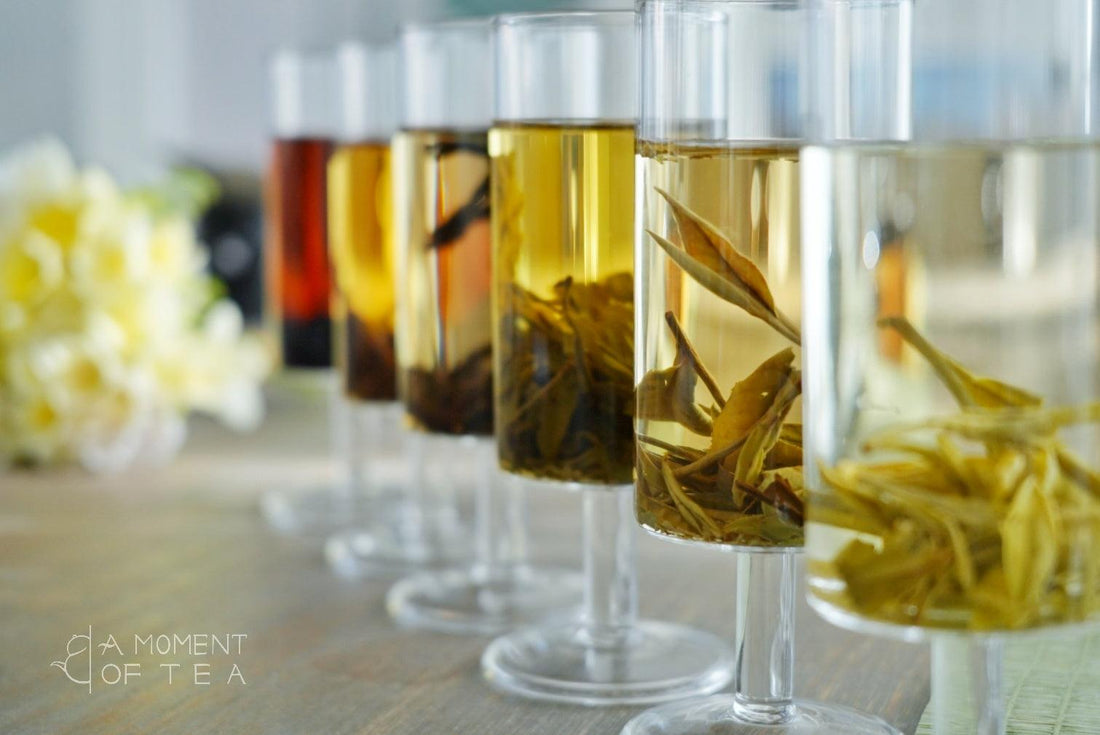
These categories are based on oxidation level — how much the leaves are exposed to air during processing. Less oxidation keeps them green and fresh; more oxidation makes them darker and bolder.
Green tea
Unoxidised. The leaves are heated soon after picking to stop oxidation, keeping the colour green and the taste fresh. Chinese green teas like Dragon Well have a chestnut-like sweetness, while Jasmine Dragon Pearls add a floral layer from fresh jasmine blossoms. Browse our green tea collection.
White tea
The least processed category. Young leaves and buds are picked and left to wither in the sun, then dried. The result is soft, light, and often sweet — Silver Needles is a good example. White tea also ages well: our Aged White Tea 2012 has developed a honey depth over a decade of ageing. See our white tea collection.

Yellow tea
Rare and similar to green tea, but with an extra step that gently oxidises the leaves under a damp cloth. This removes the grassiness you sometimes get with green tea, leaving a mellower, smoother cup.
Oolong tea
Partially oxidised — anywhere from 15% to 85%, which is why oolongs range widely. Light oolongs like Alishan are floral and buttery. Roasted oolongs like Big Red Robe have deeper mineral and toasted grain notes. See our oolong collection.
Black tea
Fully oxidised, which gives black tea its dark colour and bold character. In China, black tea is actually called "red tea" (红茶) because of the reddish colour of the brew. Our Yunnan Black Tea has malty, chocolate notes typical of Yunnan's large-leaf variety. See our black tea collection.
Dark tea (post-fermented)
This category includes pu-erh, which goes through microbial fermentation — a process quite different from oxidation. Ripe pu-erh is smooth and earthy from the start. Raw pu-erh starts bright and sharp, then mellows over years of ageing, similar to wine. Our Tasmanian Lavender Puerh — which was awarded at the 2025 Royal Tasmanian Fine Food Awards — is a ripe pu-erh blended with local lavender. See our pu-erh collection.

What about herbal tea?
Herbal teas (tisanes) like Sweet Rose Dew or Osmanthus Flower Tea aren't technically "tea" because they don't come from Camellia sinensis. They're made from dried flowers, fruits, or herbs. They're naturally caffeine-free, which makes them a good evening option.
How is tea celebrated across cultures?
In China, Gongfu tea brewing turns preparation into a focused, meditative practice. Japan developed Chanoyu — the matcha-based ceremony rooted in Zen philosophy. Britain built afternoon tea into a social tradition. Each culture found its own way to make tea meaningful.

What connects all of these is the simple idea of slowing down. A gaiwan, a cast-iron teapot, a favourite mug — the vessel doesn't matter much. The act of making tea gives you a few quiet minutes in an otherwise busy day.
A note from Joanne
If you're not sure where to start, I'd suggest Jasmine Dragon Pearls — it's approachable, the jasmine aroma makes it immediately enjoyable, and it brews up smooth. If you want to try a few different types, our sampler packs let you compare across categories without buying full packets.
You're also welcome to visit our Tea Bar at Salamanca Art Centre in Hobart — I'm happy to brew a few options and help you find what suits you.

Common questions about tea types
What's the difference between green tea and black tea?
They come from the same plant. Green tea is heated right after picking to prevent oxidation, keeping it light and fresh. Black tea is allowed to fully oxidise before drying, which makes it darker and bolder. The caffeine content is roughly similar, though black tea tends to sit slightly higher.
Which tea has the least caffeine?
Herbal teas (like rose or osmanthus) are completely caffeine-free because they don't contain Camellia sinensis leaves. Among true teas, white tea and aged ripe pu-erh tend to be lowest. For a full breakdown, see our caffeine guide.
Can I re-steep tea leaves?
Yes — most quality loose-leaf tea gives you 3 to 8 steeps, sometimes more. Oolong and pu-erh are especially good for re-steeping because the flavour shifts noticeably each time.
What's the easiest tea to brew for a beginner?
Black tea and ripe pu-erh are the most forgiving — they're hard to over-brew, and they taste good across a range of water temperatures. Green tea needs cooler water (70-80°C) and shorter steeping, so it takes a bit more attention.
Last updated: March 2026
If you're in Hobart, drop by our Salamanca Tea Bar — we'll brew whatever interests you, no pressure to buy. You'll also find us at Salamanca Market every Saturday morning.