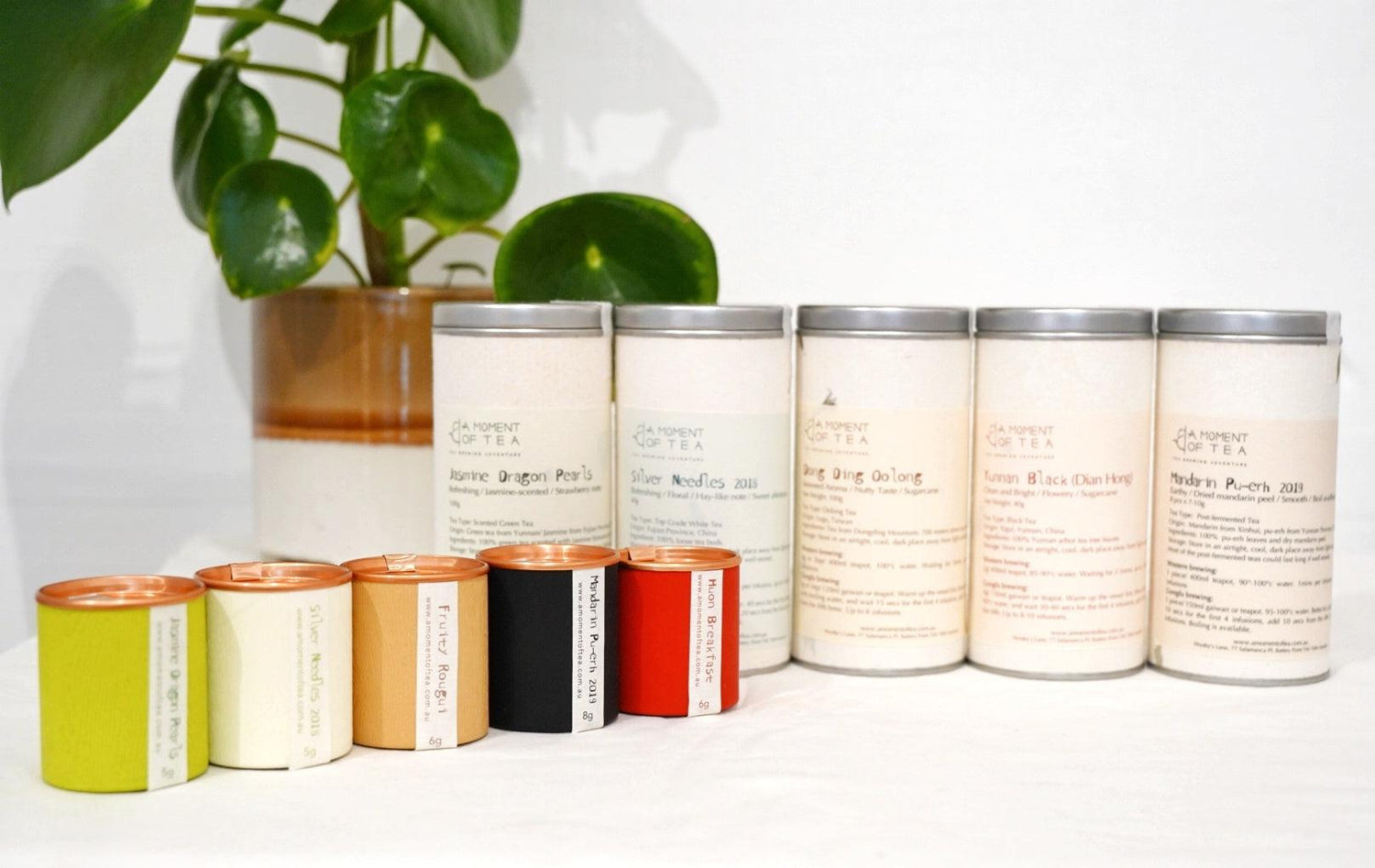

Dark tea (heicha): beyond pu-erh
Think of aged cheese. Most people can name cheddar, maybe brie, possibly gouda. But the world of aged cheese runs far deeper than those three, and the same is true for dark tea. If you've heard of pu-erh, you already know one member of this family. Most people stop there. That's a bit like tasting cheddar and deciding you've understood all aged cheese.
Dark tea (黑茶, hēichá) is the only category of Chinese tea that undergoes true microbial fermentation. While oolong and what English speakers call "black tea" go through enzymatic oxidation — a chemical reaction driven by oxygen and enzymes — dark tea relies on living microorganisms: yeasts, bacteria, and moulds that break down the leaf over days, weeks, or even years. This post-fermentation process is what gives dark tea its earthy depth, smooth body, and ability to improve with age.
The name itself causes confusion. In Chinese, 黑茶 literally means "black tea," but it has nothing to do with the English-language "black tea" (which is called 红茶, hóngchá, or "red tea" in China). We covered this naming tangle in our article on why the names don't match. For this guide, we'll stick with "dark tea" to keep things clear.

The dark tea family: more than just pu-erh
All dark teas share one thing: post-fermentation through microbial activity (渥堆, wòduī, or pile fermentation). Tea leaves are piled about a metre high, covered with damp cloth, and kept warm and humid — typically above 25°C at around 85% humidity — for anywhere from 24 hours to 45 days. During this time, yeasts and bacteria break down the leaf. The result is a tea that tastes fundamentally different from anything produced by oxidation alone.
But within that shared process, the variety is wide. Here is a look at the main members of the dark tea family, and how they differ in flavour and character:
| Dark tea | Origin | Flavour profile | Distinguishing trait |
|---|---|---|---|
| Sheng pu-erh (生普) | Yunnan | Bright, astringent when young; develops dried fruit and honey notes over decades | Ages naturally over time; technically a sun-dried green tea at the start |
| Shu pu-erh (熟普) | Yunnan | Earthy, smooth, woody; deep reddish-brown liquor | Accelerated fermentation (developed in 1973); ready to drink now |
| Fu zhuan (茯砖, fú zhuān) | Hunan (Anhua) | Deep amber liquor, smooth, mellow, with a gentle sweetness | Contains "golden flower" (金花) — a beneficial mould deliberately cultivated |
| Liu bao (六堡茶, liù bǎo chá) | Guangxi | Betel nut aroma, clean aged taste, silky body | Prized for its dampness-clearing (祛湿, qū shī) properties in TCM |
| Lu'an heicha (六安黑茶) | Anhui | Mild bamboo fragrance, smooth, clean | Traditionally packed in bamboo baskets, giving it a subtle bamboo note |
| Qingzhuan cha (青砖茶) | Hubei | Smoky, robust, thick body | Another traditional brick tea from central China |
Each of these teas developed in a different region to meet different needs. They share the post-fermentation step, but the local climate, the specific microorganisms involved, and centuries of regional tradition give each one a distinct character. Our guide to the six types of Chinese tea covers the broader picture, including where dark tea fits among the other five categories.
Why people drink dark tea: digestion, dampness, and daily life
Dark tea didn't become popular because it tasted interesting at a tasting event. It became popular because people needed it. For centuries, dark tea was a practical, everyday necessity for millions of people across China, and the reasons were rooted in diet, climate, and traditional Chinese medicine.
Fu zhuan and the nomadic north. In Inner Mongolia and the Tibetan Plateau, herding communities lived on meat and dairy with very little fresh vegetables or grains. Their bodies needed help digesting that heavy, protein-rich diet. Fu zhuan (茯砖) — pressed into bricks for easy transport on horseback — became the solution. In TCM terms, dark tea is classified as warm (温性, wēnxìng), meaning it gently warms the digestive system and supports the breakdown of heavy foods. For nomadic peoples, it wasn't a luxury. It was as essential as the food itself.

Fu zhuan has one more thing that makes it unusual: golden flower (金花, jīn huā). If you break open a brick of fu zhuan, you might see tiny yellow-gold specks scattered through the compressed leaves. This is Eurotium cristatum, a beneficial mould that is deliberately cultivated during production. The bricks are kept in a warm room for about 20 days to encourage this growth. I know — "mould on my tea" doesn't sound appealing. But golden flower is not a defect. It makes the tea smoother, sweeter, and gives the liquor a deep amber colour. Think of it like the blue veins in Roquefort cheese or the cultures in yoghurt: controlled, intentional, and part of what makes the product what it is.
Liu bao and the humid south. Down in Guangdong and Guangxi provinces, the climate problem is the opposite: heat and humidity. In TCM, prolonged exposure to damp, hot weather can lead to a condition called "dampness" (湿气, shīqì) — a feeling of heaviness, sluggishness, and poor appetite. Liu bao tea (六堡茶) from Guangxi has been drunk for centuries in these regions specifically for its dampness-clearing (祛湿, qū shī) properties. It was the go-to tea for labourers, traders, and families in southern China, especially during the long, humid summers.
Our team member Katrina is from Guangxi — liu bao's home region. She grew up with this tea as part of daily life, not as something exotic. When she joined us in Hobart, she mentioned that good liu bao was surprisingly hard to find in Australia. That conversation got us thinking. We're currently selecting suitable liu bao to bring into the store, and Katrina's knowledge of what to look for has been guiding the process. We'll share more when it arrives.
Pu-erh and the post-meal tradition. Pu-erh (普洱, pǔ'ěr) is the most widely known dark tea outside China, and it also has a strong association with digestion. In Yunnan and across southern China, drinking shu (ripe) pu-erh after a heavy meal is common practice. Its warm TCM nature and smooth, low-astringency character make it comfortable on the stomach. Many of our customers at the Tea Bar order pu-erh in the afternoon, after lunch, or in the evening as a winding-down tea.
Brewing dark tea and choosing well
Dark tea is forgiving to brew. Unlike delicate green or white teas, dark tea handles boiling water well and doesn't turn bitter easily. Here are the basics:
Brewing guide
- Water temperature: 95-100°C (boiling or just off the boil)
- Tea amount: 5g per 150ml (gongfu style) or 3-4g per 250ml (mug style)
- Steeping time: 30 seconds to 1 minute for the first infusion (gongfu); 3-4 minutes for mug style
- Re-steeps: 10-20 infusions (gongfu); 2-3 re-steeps (mug)
- Rinse first: Pour hot water over the leaves, discard after 5 seconds, then brew. This wakes up the leaf and washes away any surface dust from compressed cakes or bricks.

If you're new to gongfu-style brewing, our step-by-step gongfu guide covers the full method.
Tips from our Tea Bar
I've found that the most common concern people have about dark tea is the smell. A well-made dark tea should smell clean — earthy, woody, perhaps slightly sweet. If it smells fishy, sour, or unpleasantly musty, that's a quality issue, not a feature of the category. When I introduce dark tea at our Tea Bar, I start people with a shu pu-erh because the flavour is approachable: smooth, earthy, a little sweet. From there, it's easier to explore the wider family.
One of our customers, Sam, described our Tasmanian Lavender Pu-erh as having "calming lavender and earthy puerh" that "feels very 'Tasmanian'" — and mentioned that the pu-erh kept him energised without an afternoon crash. That blend, awarded a Silver Medal at the 2025 Royal Tasmanian Fine Food Awards, is a good example of how the earthy base of shu pu-erh pairs well with other flavours. Another customer sampled it while travelling in Tasmania and told us it became "a night time staple" after they got home.

How to store dark tea
Dark tea should be kept in a dry place with some airflow — not in an airtight container. Unlike green tea, which you want to seal tightly, dark tea benefits from a small amount of air exchange. Avoid strong odours (dark tea absorbs smells easily), direct sunlight, and high moisture. A shelf or cupboard away from the kitchen stove works well. Shu pu-erh will keep for about 10 years. Sheng (raw) pu-erh, stored properly, can age for decades and will change significantly over time.
What we carry
Our dark tea selection focuses on pu-erh from Yunnan. We carry both raw and ripe styles — from our entry-level Ripe Pu-erh 2021 loose leaf, to the "Sweet Stock" Huang Pian Brick, to the Raw Pu-erh Ancient Single Tree for those who want something with real depth. Our Mandarin Pu-erh stuffs ripe pu-erh inside aged mandarin peel for a citrus-tea combination that works well after meals. And our Tasmanian Lavender Pu-erh blends local Tasmanian lavender with shu pu-erh — our own take on bridging Chinese tea tradition with Tasmanian ingredients.
We don't yet carry fu zhuan or liu bao, but as I mentioned, we're working on adding liu bao to the range. You can browse our current selection in the pu-erh tea collection.
Frequently asked questions
Is dark tea the same as black tea?
No. In English, "black tea" refers to fully oxidised tea (known as 红茶 / red tea in Chinese). Dark tea (黑茶, hēichá) is a separate category that undergoes microbial post-fermentation rather than oxidation. They are completely different processes and produce very different teas.
Is the mould on fu zhuan tea safe to drink?
Yes. The golden flower (金花) on fu zhuan is Eurotium cristatum, a beneficial mould deliberately cultivated during production. It's similar in principle to the moulds used in cheese-making or soy sauce fermentation. It makes the tea smoother and sweeter. However, if you see white, green, or black mould on any tea that isn't supposed to have it, that's contamination — don't drink it.
What does dark tea taste like?
It varies across the family, but shu pu-erh — the most common type — tastes earthy, smooth, and slightly sweet, with notes of wood, dried dates, or damp forest floor. Fu zhuan tends to be mellower with a gentle sweetness. Liu bao has a clean, aged taste with a characteristic betel nut aroma. None of them should taste fishy or unpleasantly sour.
Can I drink dark tea at night?
Shu pu-erh and aged dark teas generally have lower stimulating effects than green or oolong tea, and many people drink them in the evening. That said, they still contain caffeine, so sensitivity varies. If caffeine keeps you up, try brewing lighter or drinking it earlier in the evening.
How is dark tea different from pu-erh?
Pu-erh is one type of dark tea, specifically from Yunnan province. Dark tea (heicha) is the broader category that includes pu-erh alongside fu zhuan from Hunan, liu bao from Guangxi, lu'an heicha from Anhui, and others. Saying "dark tea" when you mean only pu-erh is like saying "cheese" when you mean only cheddar.
Teas mentioned in this article
- Ripe Pu-erh 2021 Post-fermented Tea
- "Sweet Stock" Ripe Pu-erh Brick 2021 Huang Pian
- "The One" Ripe Pu-erh Cake 2024
- Fossil Pu-erh / Sui Yin Zi
- Raw Pu-erh Ball 2021
- Raw Pu-erh Ancient Single Tree
- Mandarin Pu-erh
- Tasmanian Lavender Pu-erh — awarded a Silver Medal at the 2025 Royal Tasmanian Fine Food Awards
Published: March 2026 | Last updated: March 2026