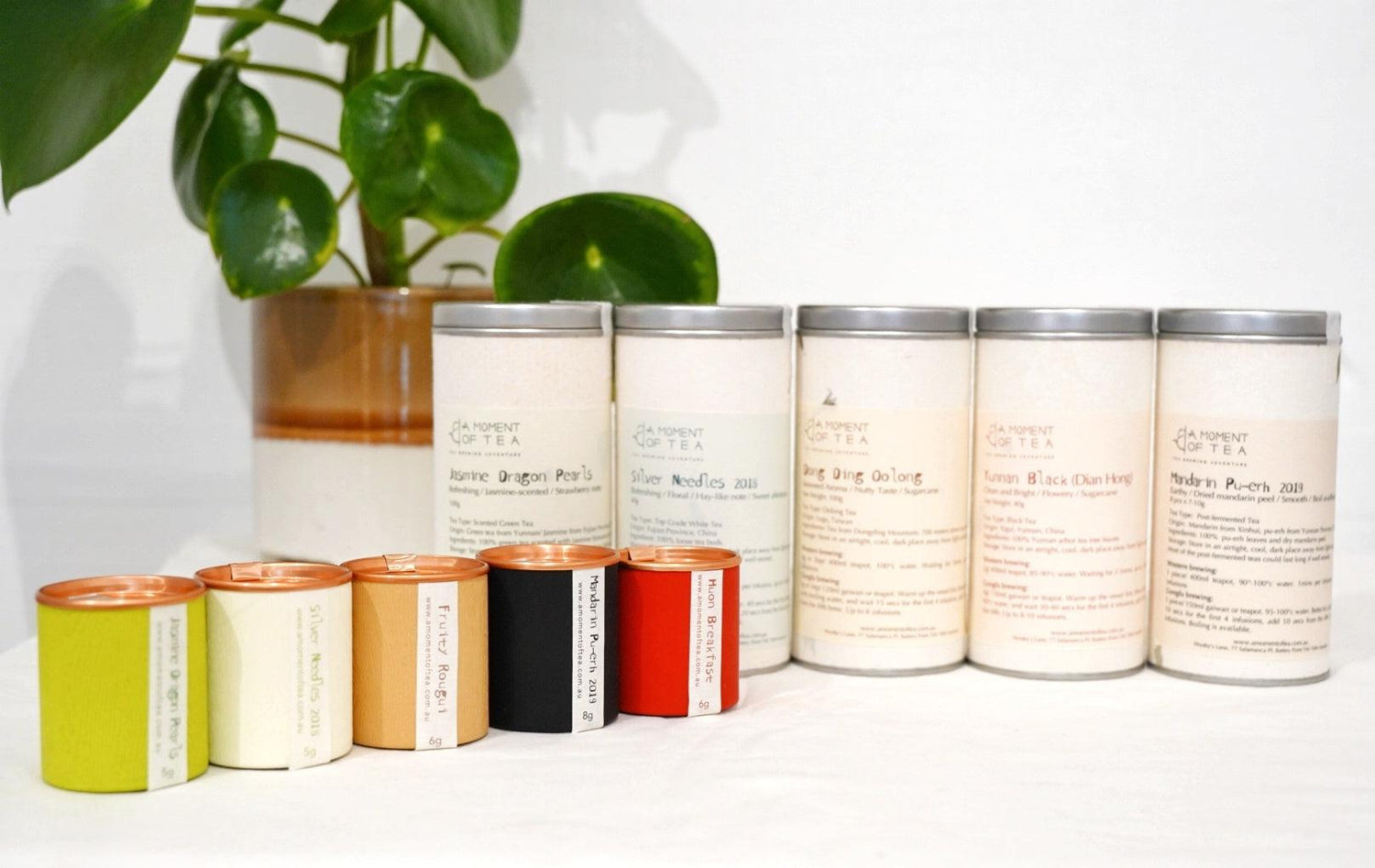

Pu-erh Tea Guide: Understanding Raw vs Ripe
Pu-erh tea is a post-fermented tea from Yunnan Province, China. Unlike green or black tea, pu-erh goes through microbial fermentation — either naturally over years (raw pu-erh) or through an accelerated process (ripe pu-erh). This fermentation gives pu-erh its distinctive earthy character, and it's one of the few tea styles that can develop well with careful storage.
Think of raw pu-erh like fresh cheese and ripe pu-erh like aged cheddar. They come from the same starting point, but the process changes everything about how they taste and feel. If coffee is your reference point, young raw pu-erh sits closer to a bright light roast, while ripe pu-erh is more like a smooth dark roast — ready to drink straight away.

What is pu-erh tea?
Pu-erh (普洱) is a tea category on its own. In China's tea classification, it falls under "dark tea" (黑茶), which refers to teas that undergo post-production fermentation. What sets pu-erh apart from other dark teas is geography: to be called pu-erh, the tea must be made from large-leaf tea trees grown in Yunnan's specific terroir.
The base material is sun-dried green tea, called "maocha" (毛茶). What happens after that initial drying is what separates raw pu-erh from ripe.
Pu-erh has been traded along the ancient Tea Horse Road for centuries. The tea was compressed into cakes and bricks for transport on horseback, and traders noticed something interesting: the tea changed during the long journey. It got smoother, sweeter, and less bitter. That accidental ageing process became intentional, and today aged pu-erh cakes are collected the way some people collect wine.

Raw vs ripe: two different teas
This is where most newcomers get confused. Raw (sheng, 生) and ripe (shou, 熟) pu-erh look different, taste different, and suit different people. Here's how they compare:
| Raw pu-erh (sheng) | Ripe pu-erh (shou) | |
|---|---|---|
| Processing | Sun-dried, then compressed. Ages naturally over years. | Sun-dried, then pile-fermented (wodui) for 45-60 days before compressing. |
| Colour | Green-yellow when young, darkens with age | Deep reddish-brown from the start |
| Taste when young | Bright, floral, sometimes astringent. Can be bitter. | Smooth, earthy, malty-sweet. Rarely bitter. |
| Taste when aged | Mellows into honey, dried fruit, wood notes over 10-20+ years | Already smooth. Gets cleaner and sweeter over 3-5 years. |
| Caffeine | Higher, comparable to black tea | Generally low-medium. Pure mature-leaf styles (huang pian) and blended pu-erhs run lower; ripes with younger buds and tips run higher. |
| TCM character | Cool (凉性) when young, becomes neutral with age | Warm (温性) |
| Best time to drink | Morning or afternoon | Morning to afternoon for ripes with younger buds and tips; blended and huang pian styles also work for evenings |
| Good for beginners? | Can be challenging. Start with aged or blended versions. | Yes. Smooth and forgiving. |
| Price range | Varies widely. Ancient tree versions are expensive. | Generally more affordable for everyday drinking. |

The pile fermentation process for ripe pu-erh was developed in 1973 at the Kunming Tea Factory. Before that, all pu-erh was raw. The technique was created to replicate some of the smooth, aged character that naturally occurs in raw pu-erh, but in weeks rather than decades.
How pu-erh tea is made
Both types start the same way. Fresh leaves are picked, briefly pan-fired to stop oxidation, then rolled and sun-dried. This creates maocha (毛茶), the raw material.
For raw pu-erh: The maocha is steamed to make it pliable, then pressed into cakes, bricks, or balls. After that, time does the work. The tea slowly ferments through contact with ambient microorganisms, changing year by year. A five-year-old raw pu-erh tastes completely different from a twenty-year-old one.
For ripe pu-erh: The maocha is piled in large heaps, sprinkled with water, and covered with thermal blankets. Microorganisms generate heat and break down the tea's compounds over 45-60 days. Workers turn the piles regularly to control temperature. After fermentation, the tea is dried and either sold as loose leaf or compressed into cakes.
The region matters. Pu-erh from different areas of Yunnan — Menghai, Yiwu, Xigui, Lincang — has distinct character, much like wine from different vineyards. Our Raw Pu-erh Ancient Single Tree comes from centuries-old trees in Xigui, known for citrus brightness and lingering sweetness. The Ripe Pu-erh Cake uses Menghai tea, which tends towards earthy richness.

 Joanne visiting ancient tea trees in Yunnan Province, where our pu-erh teas are sourced.
What does pu-erh taste like?
This depends entirely on which type you're drinking.
Young raw pu-erh can be sharp and grassy, with floral or fruity notes. Some people love this brightness right away; others find it too astringent. The Raw Pu-erh Balls from Yiwu are a good example of approachable raw pu-erh — they've got floral notes and cane sugar sweetness without being too aggressive.
Ripe pu-erh is where you get those earthy, woody, sometimes mushroomy flavours that pu-erh is famous for. A well-made ripe pu-erh should be smooth, not musty. You might pick up brown sugar, dried dates, or a clean earthiness that reminds you of forest floor after rain. One of our regulars described our Fossil Pu-erh as having "a rice accord": smooth, rich, and cozy.
If you find the pure earthy flavour too much at first, blended pu-erh can be a good bridge. Our Tasmanian Lavender Puerh pairs Menghai ripe pu-erh nuggets with locally grown Tasmanian lavender — the floral note softens the earthiness without hiding it. It was awarded a Silver Medal at the 2025 Royal Tasmanian Fine Food Awards, and it's where many of our customers start.

How to brew pu-erh tea
Pu-erh is forgiving. It's harder to ruin than green tea, and the leaves keep giving across multiple steeps. You'll want to rinse the leaves first — pour hot water over them, then immediately pour it out. This wakes the tea up and clears any dust from compression.
Western brewing (simple, everyday)
Use about 2g of tea per 250ml of water at 95°C. Steep for 3 minutes. This works for both raw and ripe, though you might want slightly cooler water (90°C) for young raw pu-erh to reduce bitterness. You'll get 2-3 good infusions this way.
Gongfu brewing (short steeps, many rounds)
This is where pu-erh really shines. Use 5-6g of tea in a small gaiwan or Yixing teapot (100-150ml). Pour 95-100°C water and steep for just 10-30 seconds on the first infusion. Add 5-10 seconds each round. You can easily get 8-15 infusions from good pu-erh, and the flavour evolves with each steep.


Thermos brewing (焖泡 — set and forget)
This one surprises people. Drop about 1g of ripe pu-erh into a 200ml thermos with boiling water and leave it. Half an hour, an hour, all day — ripe pu-erh stays smooth at a low leaf-to-water ratio. It's what a lot of Chinese tea drinkers do at the office. Toss the leaves in your thermos in the morning, sip throughout the day. We've since written a full thermos brewing guide with leaf ratios by tea type and the mistakes to avoid.
Caffeine in pu-erh tea
Raw pu-erh has moderate to high caffeine, roughly 30-50mg per cup, comparable to black tea. It tends to feel brighter and more energising than ripe pu-erh.
Ripe pu-erh is generally low to medium caffeine. Pure mature-leaf styles like our Sweet Stock huang pian and blended pu-erhs (Tasmanian Lavender) sit around 15-30mg per cup. Ripes with younger buds and tips — like our spring-picked Ripe Pu-erh 2021, "The One" cake (which includes ancient-tree leaves), and Mandarin Pu-erh — sit around 30-50mg. The fermentation process reduces some of the caffeine, but leaf grade and bud content matter too. Blended and huang pian styles work for afternoon or evening cups; bud-containing ripes suit morning to afternoon. If you're particularly sensitive to caffeine, try them earlier in the day first.
How to store pu-erh tea
Pu-erh is the least fussy tea when it comes to storage. Unlike green tea, you don't need to refrigerate it. The key points:
Keep it away from strong odours. Pu-erh absorbs smells readily. Don't store it next to your spice rack or coffee beans. A dedicated shelf or a simple cardboard box works well.
Moderate humidity helps. Completely airtight containers can actually slow down ageing for raw pu-erh, because the tea needs some air circulation to continue its slow fermentation. If you're in a dry climate (and much of Australia qualifies), a slightly breathable storage solution is better than a vacuum seal.
Ripe pu-erh and loose leaf pu-erh are less particular. An airtight container in a cool, dark spot is fine.
Temperature stability matters more than specific temperature. Avoid heat sources and direct sunlight. A cupboard away from the stove is ideal.
Tips from our Tea Bar
I've served hundreds of cups of pu-erh at our Tea Bar at Salamanca Art Centre, and a few things come up again and again.
First, people expect pu-erh to taste like strong black tea. It doesn't. The earthiness catches some people off guard. I usually start customers with our Lavender Puerh or a Mandarin Pu-erh. The blended flavour gives context that makes the earthy base easier to enjoy. Once they've had a few cups, I'll move them to a straight ripe pu-erh, and by then they usually understand the style.
Second, the rinse matters more than you'd think. Yes, it clears the leaves, but the wet leaves also release an aroma that sets you up for the first sip. Take a moment to smell the rinse water and the warmed leaves before your first brew. That smell is half the experience.
Third, pu-erh after a heavy meal is a longstanding Chinese tea habit. We hear it from Chinese customers often, and it is one reason ripe pu-erh remains a popular after-dinner style. Our Mandarin Pu-erh is a classic version of this pairing, with dried mandarin peel adding warm citrus depth to the ripe pu-erh base.

If you're still deciding which pu-erh to buy first, our beginner's guide to pu-erh walks through where to start, product by product. And if you're in Hobart, come try before you buy. We brew pu-erh in every session, and tasting is the fastest way to find out which style suits you.
Frequently asked questions
Is pu-erh tea the same as black tea?
No. In Western tea terminology, "black tea" refers to fully oxidised tea (like English Breakfast). Pu-erh is a post-fermented tea — it goes through microbial fermentation after production, which is a completely different process from oxidation. The confusion comes from Chinese naming: in Chinese, what Westerners call "black tea" is actually called "red tea" (红茶), and pu-erh falls under "dark tea" (黑茶). They taste quite different.
Can I drink pu-erh tea at night?
It depends on the style. Blended ripe pu-erhs and pure mature-leaf styles (like our huang pian brick) sit in the low caffeine range and work for after-dinner cups. Ripes with younger buds and tips (loose leaf spring picks and ancient-tree cakes) sit in the medium range and are better suited to mornings or afternoons. Raw pu-erh has the highest caffeine and is generally a morning-to-afternoon tea.
What does pu-erh tea taste like?
Raw pu-erh tastes bright and floral when young, sometimes with noticeable astringency. It mellows with age into honey and dried fruit notes. Ripe pu-erh is earthy and malty-sweet with a smooth body. Some people describe it as tasting like forest floor or brown sugar. Neither should taste musty or fishy; if it does, that's a sign of poor quality or bad storage.
How long does pu-erh tea last?
Properly stored, pu-erh doesn't expire the way other teas do. Raw pu-erh can develop over decades. Ripe pu-erh doesn't change as dramatically, but it can get cleaner and smoother over 3-10 years. Loose leaf pu-erh is best consumed within a few years since it ages faster than compressed forms.
How do I break apart a pu-erh cake?
Use a pu-erh knife or letter opener. Insert it into the side of the cake at a shallow angle and gently pry upward. The idea is to separate layers of leaves, not chop through them — broken leaves brew bitter. Work around the edge first, then into the centre. You'll get the hang of it after a few tries.
Browse our full Pu-erh Tea Collection to find the right pu-erh for you — from blended introductions to single-tree raw pu-erh.
About the author
Joanne Gao is the co-founder and tea specialist at A Moment of Tea in Hobart, Tasmania. She has been studying Chinese tea culture since 2014 under Ms. Xiao at Lian Yu Tea School and sources directly from producers in Yunnan Province. You can find her at the Tea Bar at Salamanca Art Centre or at Salamanca Market every Saturday.
[Published: March 2026] [Last updated: July 2026]
If you're in Hobart, drop by our Salamanca Tea Bar — we'll brew whatever interests you, no pressure to buy. You'll also find us at Salamanca Market every Saturday morning.