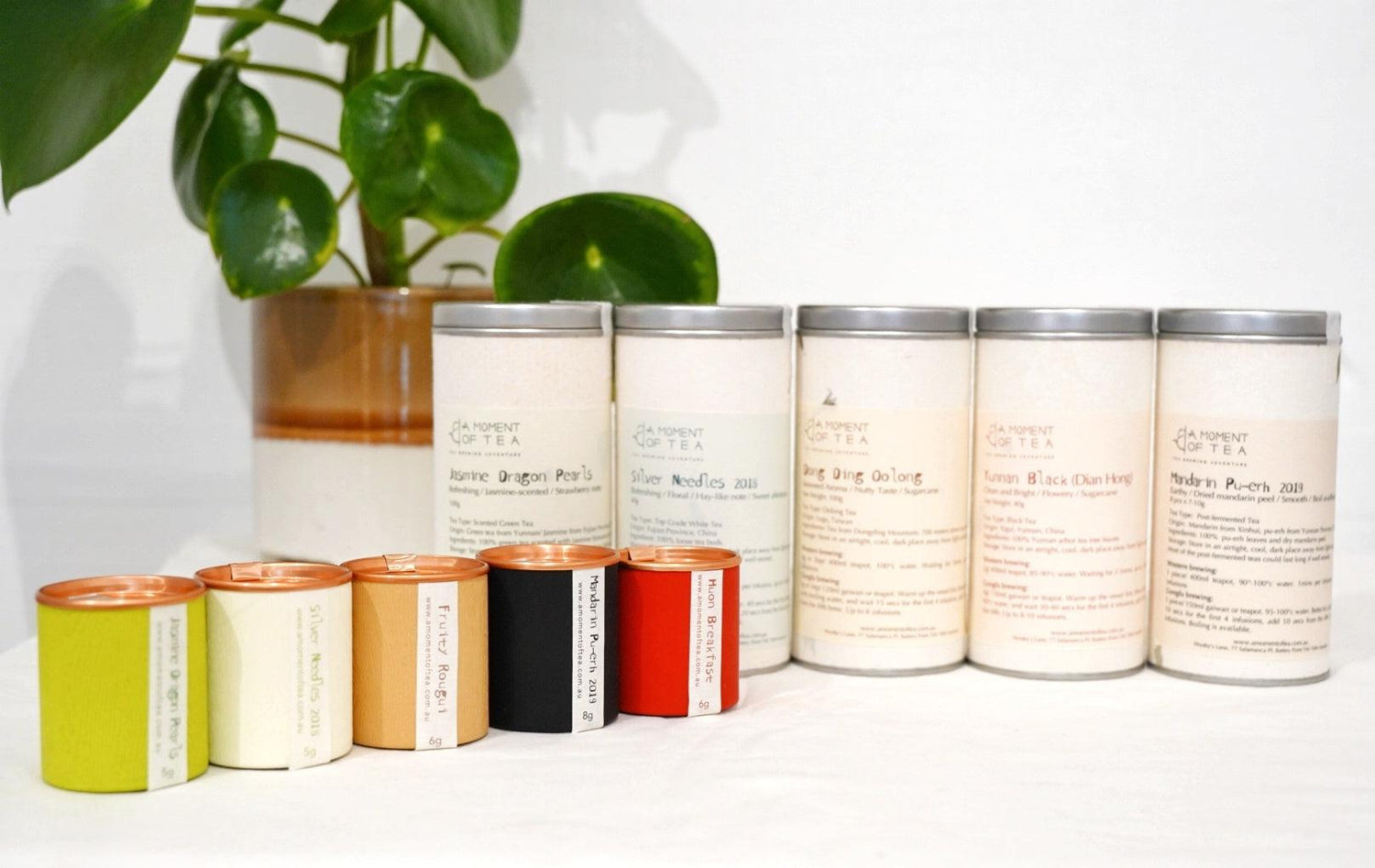

Antioxidants in Tea: Green, White, Matcha and Pu-erh Compared
Why tea contains antioxidants
Tea from the Camellia sinensis plant contains naturally occurring polyphenols, including catechins, theaflavins, and other antioxidant compounds. These compounds are one reason tea has been studied so closely, but the exact profile changes depending on how the leaves are processed.
All true tea — green, white, oolong, black, and pu-erh — contains antioxidant compounds. Less oxidised teas generally retain more catechins, while more oxidised or fermented teas develop a different profile.
Antioxidant levels by tea type
Here is a practical way to think about the main tea categories, from catechin-rich styles through to more oxidised and fermented teas.

1. Green tea — catechin-rich
Green tea is heated soon after picking to stop oxidation, which helps preserve catechins. EGCG is one of the best-known catechins in green tea. Our green teas include:
- Dragon Well (Long Jing) — hand-pressed Chinese green tea with chestnut sweetness
- Gyokuro — Japanese shade-grown green tea with strong umami
- Jasmine Dragon Pearls — green tea base scented with fresh jasmine
- Ceremonial Matcha — ground green tea where you drink the whole leaf

2. White tea — lightly processed
White tea is minimally processed. The leaves are withered and dried, which preserves a gentle flavour and a naturally high polyphenol profile. The exact level depends on picking grade, origin, and age.
- Silver Needles — pure buds, the most delicate white tea we carry
- Gardenia White Tea — white tea with gardenia flowers
- Aged White Tea 2012 — ageing changes the flavour and compound profile over time

3. Oolong tea — partially oxidised
Oolong is partially oxidised, so it sits between green and black tea. Lighter oolongs keep more of the green-tea-like character, while darker roasted oolongs develop warmer, deeper flavours and a different polyphenol profile.
4. Black tea — fully oxidised
Full oxidation changes catechins into theaflavins and thearubigins. That is why black tea tastes deeper, maltier, and less grassy than green tea. It is not "lower quality" than green tea; it simply contains a different set of compounds.
5. Pu-erh tea — fermented and aged styles
Pu-erh's post-fermentation creates a different flavour and compound profile again. Raw pu-erh changes slowly with age; ripe pu-erh goes through an accelerated fermentation process that gives it a smooth, earthy character from the start.
What affects what ends up in your cup?
The tea type matters, but brewing changes the cup too:
- Water temperature: Hotter water extracts more from the leaf, but it can also bring out more bitterness in green tea.
- Steep time: Longer steeps draw more flavour and colour from the leaves. For delicate teas, longer is not always nicer.
- Whole leaf vs teabag: Whole loose-leaf tea releases flavour gradually across multiple steeps, while broken tea releases quickly.
- Matcha difference: With matcha, you drink the ground leaf rather than steeping and removing it, so the cup includes more of the leaf material.

Our antioxidant-focused tea picks
We keep an Antioxidant-Rich collection for customers who want green, white, and matcha styles with naturally occurring tea polyphenols. A few useful starting points:
- Ceremonial Matcha (HIJIRI-NO-SATO) — ground Uji green tea powder. From $38.
- Dragon Well — classic Chinese green tea with chestnut sweetness. From $10.
- Silver Needles — pure white tea buds, light and sweet. From $11.
- Gyokuro — shade-grown Japanese green tea from Uji. $67.

A note on health language
Tea is a daily drink, not a medicine. Modern research has studied the compounds in tea, but we do not make medical claims about what a cup of tea will do for your body. If you have specific health concerns, talk with a qualified health professional.
What we can say is simpler: tea is a good-tasting, low-sugar drink with naturally occurring plant compounds, and it can be a steady part of an everyday routine.
Common questions about antioxidants in tea
Which tea has the most antioxidants?
Matcha is different because you drink the ground leaf. Among steeped teas, green tea and white tea are generally the catechin-rich styles. The exact amount depends on the tea, harvest, storage, and brewing.
Does adding milk change tea antioxidants?
Some research has looked at how milk proteins interact with tea catechins, but the practical takeaway is simple: drink the tea the way you enjoy it. Chinese and Japanese green teas are traditionally served without milk because their flavour is lighter and more delicate.
Is herbal tea high in antioxidants?
Herbal teas (tisanes) like rose tea and osmanthus flower tea contain their own plant compounds, but they are different from the catechins found in true tea. For catechin-rich tea, choose Camellia sinensis styles such as green, white, or matcha.
Does ageing change tea antioxidants?
Ageing changes the compound profile rather than giving a simple yes-or-no answer. Aged white tea and pu-erh develop different flavours and characteristics through storage and fermentation.
Last updated: May 2026
If you're in Hobart, drop by our Salamanca Tea Bar — we'll brew whatever interests you, no pressure to buy. You'll also find us at Salamanca Market every Saturday morning.