
How to Drink Loose Leaf Tea
How to brew loose leaf tea at home
Brewing loose leaf tea is straightforward: put tea leaves in hot water, wait, then drink. The main variables are water temperature, how much tea you use, and how long you steep it. Get those roughly right and the tea will taste good. Get them precisely right and you'll notice a clear difference from what you've been getting out of tea bags.
This guide covers the basics — equipment, water temperature for each tea type, and a few things that commonly go wrong.
What you need to get started
You don't need much. A teapot with a built-in infuser or a single-cup infuser basket will do for Western-style brewing. If you want to try Gongfu-style (smaller vessel, more leaf, shorter steeps), a gaiwan is the most versatile option — it works for every tea type and costs less than most teapots.

A measuring spoon or small kitchen scale helps with consistency. About 2-3 grams per cup is the starting point for Western brewing. A temperature-controlled kettle makes life easier but isn't essential — you can let boiled water sit for a few minutes to cool it down.
If you'd like to see these tools in action before buying, our Tea Bar at Salamanca Art Centre is set up for exactly that. Or browse our teaware collection online.
Water temperature and steeping times
This is where most people go wrong. Boiling water is fine for black tea and pu-erh, but it will scorch green tea and make it bitter. Here's the breakdown:
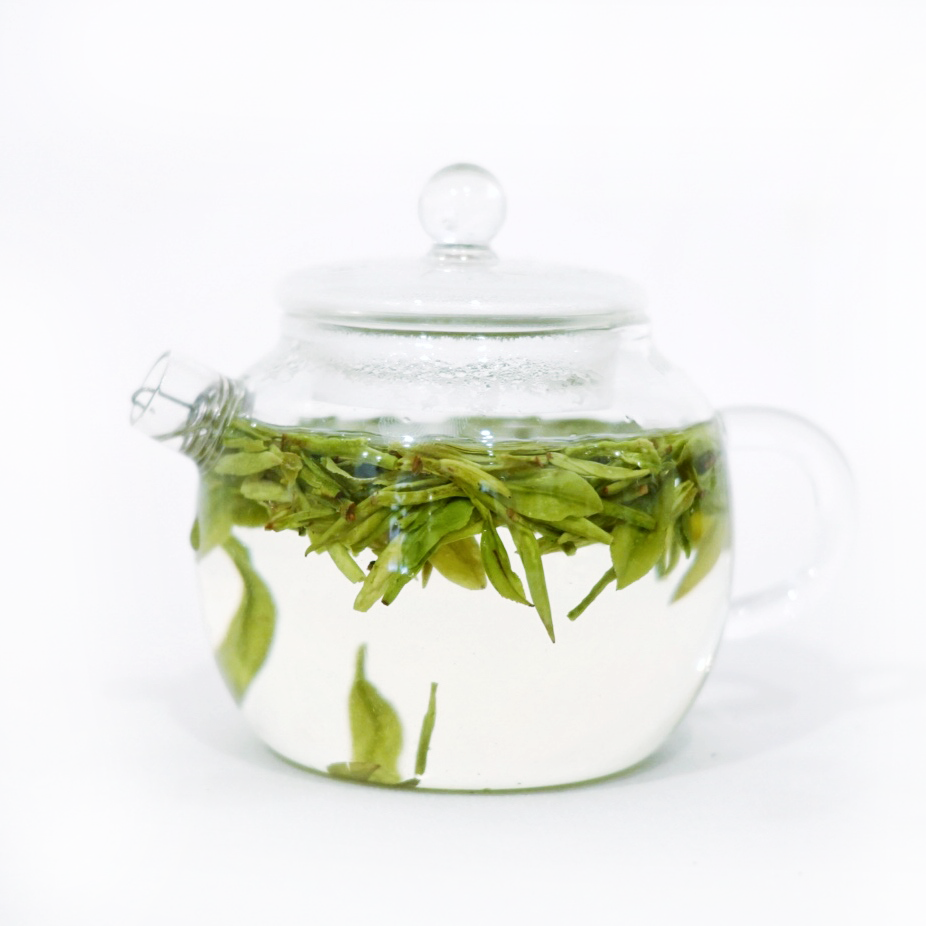
Green tea: 70-80°C, steep 2-3 minutes. Cooler water brings out sweetness instead of bitterness. Our Dragon Well brewed at 80°C tastes sweet and clean.
White tea: 80-85°C, steep 3-4 minutes. Gentle and forgiving — hard to over-brew.
Oolong tea: 85-95°C, steep 2-3 minutes. Lighter oolongs on the cooler end, roasted oolongs hotter.
Black tea: 95-100°C, steep 3-4 minutes. The one tea type where boiling water is fine.
Pu-erh tea: 95-100°C, steep 3-5 minutes. Give it a quick rinse with hot water first to open up the leaves.
Herbal / flower tea: 90-100°C, steep 4-5 minutes. No caffeine, so timing is less critical.
The general rule: lighter teas need cooler water. If your tea tastes bitter, the water was probably too hot or you steeped too long. Try dropping the temperature by 5-10°C next time.

How much tea per cup
For a standard mug or teapot (200-300ml), use about 2-3 grams — roughly a teaspoon for most teas. Bulky leaves like white tea or oolong might look like more because they take up space, but they weigh the same.
For Gongfu brewing in a small vessel (100-150ml), use 5-8 grams with steeps starting at 10-20 seconds. This method gives you multiple cups from the same leaves, each tasting a bit different.
Re-steeping your leaves
One of the main reasons loose leaf tea is worth it: you can brew the same leaves multiple times. Most quality teas give you 3-5 good steeps, and oolong and pu-erh often go to 8-12. The flavour changes each time — early steeps tend to be brighter and more aromatic, later steeps become smoother and sweeter.
Add 15-30 seconds to each subsequent steep to keep the strength up as the leaves gradually give up their flavour.
Three teas to try first
If you're picking your first loose leaf teas, these three cover different parts of the spectrum:
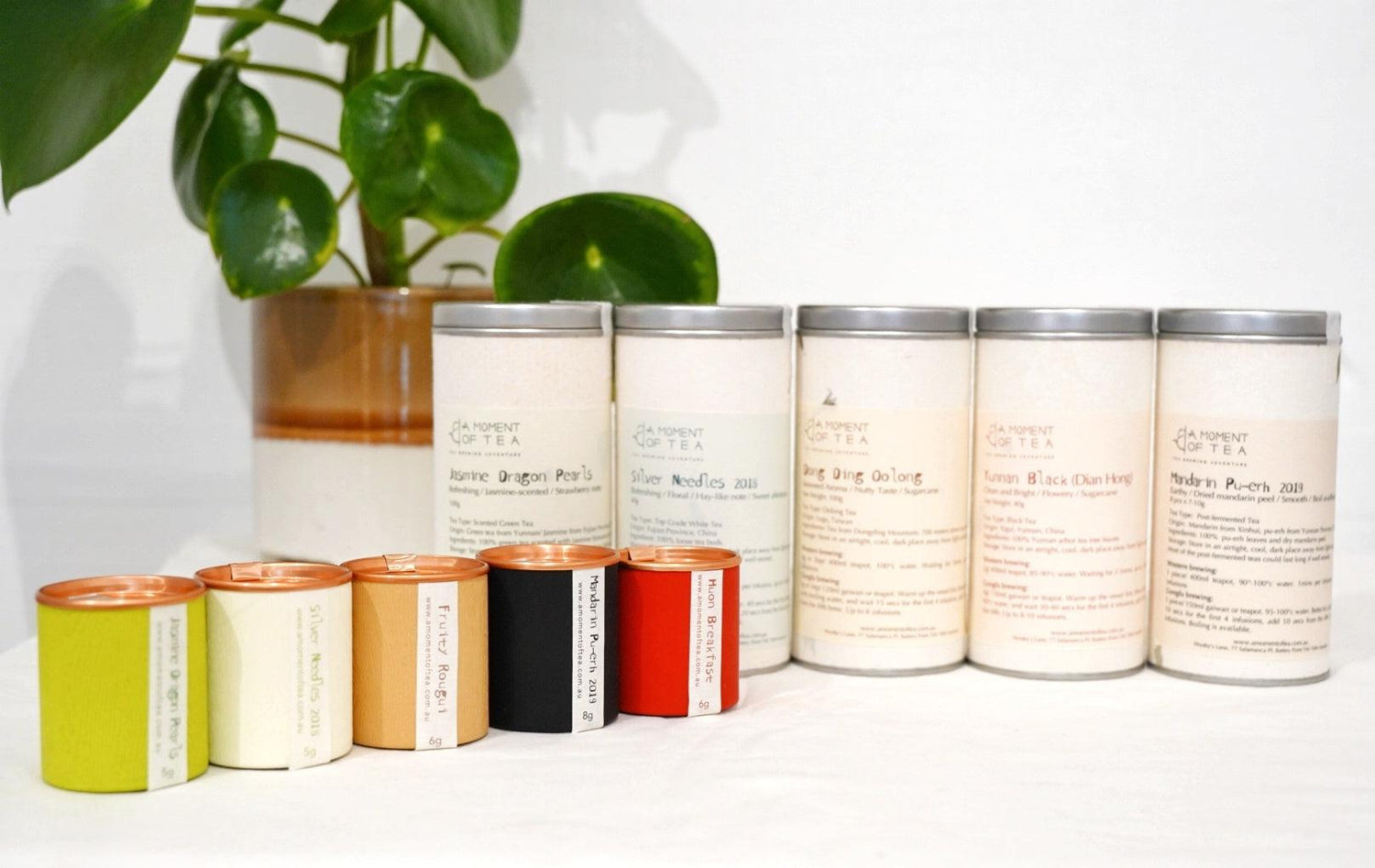
Jasmine Dragon Pearls (from $8) — hand-rolled green tea with jasmine scent. Approachable and forgiving to brew. Good for mornings.

Tasmanian Lavender Puerh (from $7) — smooth ripe pu-erh with local lavender. Low caffeine, works well after dinner. Won first place at the 2025 Royal Tasmanian Fine Food Awards.
Sweet Rose Dew (from $8) — pure rose petals, no caffeine at all. Naturally sweet without sugar. Good before bed.

Not sure which to pick? Our sampler packs (from $25) let you try several without committing to full packets.
Storing your tea
Keep tea in an airtight container, away from light, moisture, and strong smells. A tin or ceramic caddy works well. Avoid clear glass jars on the bench — they look nice but the light degrades the leaves. Most teas keep well for 12 months this way. The exceptions are pu-erh and aged white tea, which actually improve over time.
A note from Joanne
The single most common mistake I see at our Tea Bar is people using boiling water for green tea. Once you fix that one thing, the difference is immediate. If you're new to loose leaf, start with one tea you like, get comfortable with it, then branch out. There's no rush.
Common questions about loose leaf tea
Is loose leaf tea more expensive than tea bags?
Per cup, often not. A 50g packet of quality loose leaf makes 25-30 cups with Western brewing, and you can re-steep the leaves for more. The initial packet costs more than a box of tea bags, but the per-cup price is similar or lower.
How many times can I reuse tea leaves?
Most quality loose leaf gives you 3-5 steeps. Oolong and pu-erh can go 8-12 times. The flavour shifts with each steep, which is part of what makes it interesting.
Do I need special equipment?
Not really. A teapot with an infuser or even a mug with a strainer basket will work. A gaiwan is useful if you want to try Gongfu-style brewing later, but it's not essential when you're starting out.
Can I cold-brew loose leaf tea?
Yes. Add 3-5 grams of tea to 500ml of cold water and refrigerate for 6-12 hours. Cold brewing reduces caffeine by up to 70% and produces a smoother, sweeter cup. It works particularly well with green tea and flower teas.
What's the difference between Western and Gongfu brewing?
Western brewing uses more water, less leaf, and longer steeps — one or two cups from each brewing. Gongfu uses less water, more leaf, and short steeps (10-30 seconds) — giving you 5-10 small cups that taste different each time. Both methods are valid; Gongfu just gives you more detail from the same tea.
Last updated: March 2026