Taiwan's high mountain teas
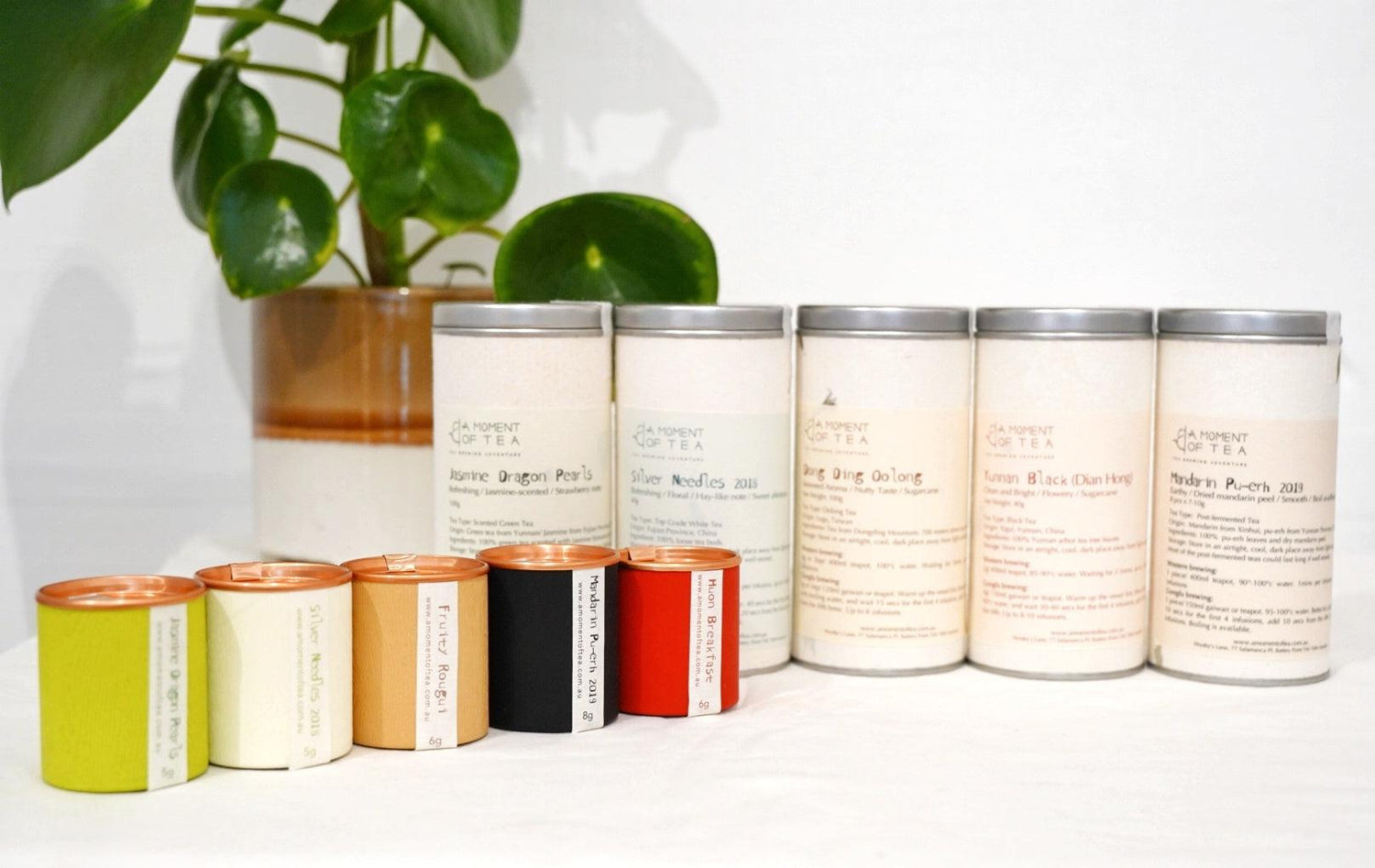
"Why does this oolong taste so different from the one I tried last time?" A visitor at our Salamanca Market stall asked this after trying our Alishan side by side with a Wuyi Da Hong Pao. They are both oolongs, but one is light, floral, and buttery while the other is dark, roasted, and mineral. The answer is altitude — and Taiwan.
Taiwanese high mountain tea (高山茶, gāoshān chá) refers to oolong teas grown at elevations above 1,000 metres in Taiwan's central mountain ranges. The high altitude brings cooler temperatures, frequent mist, and reduced sunlight. Tea plants growing in these conditions produce more amino acids and fewer bitter catechins, resulting in a naturally sweet, floral character with a creamy mouthfeel that sets Taiwanese oolongs apart from their Chinese mainland counterparts.

The key growing regions
Taiwan's tea geography is compact but varied. The most important high mountain regions each produce oolongs with distinct characters:
| Region | Elevation | Character | Notes |
|---|---|---|---|
| Alishan (阿里山) | 1,000–1,600m | Floral, buttery, creamy mouthfeel | The most widely known Taiwanese oolong. Our Alishan comes from 1,300m. Misty peaks and cool temperatures year-round. |
| Lishan (梨山) | 1,800–2,600m | Delicate, orchid-like, long sweet finish | One of the highest-altitude tea regions. Very limited production. Often considered Taiwan's finest. |
| Shanlinxi (杉林溪) | 1,400–1,800m | Cedar-like freshness, clean, bright | Named after the cedar forests that surround the tea gardens. Cooler and crisper than Alishan. |
| Dong Ding (冻顶) | 600–800m | Roasted, toasty, nutty warmth | Not technically "high mountain" but one of Taiwan's most famous oolongs. Medium roast gives it a warmer character than the high mountain styles. |

Taiwanese oolongs reward slow drinking — it is worth allowing at least 45 minutes for a proper gongfu session. Each infusion shifts slightly as the tightly rolled leaves gradually unfurl.
The difference between Alishan and Dong Ding illustrates how altitude and processing interact. Alishan is grown higher and processed with lighter oxidation — the result is a tea that leans floral and creamy, with a lifted sweetness. Dong Ding is grown lower and given a medium roast — producing a warmer, nuttier cup with more toasted grain character. Both are oolongs, both are Taiwanese, but they occupy different ends of the flavour spectrum.
In TCM terms, oolong (乌龙茶, wūlóng chá — literally "dark dragon") is classified as neutral (平性, píngxìng). Light Taiwanese oolongs lean slightly cooler, while roasted versions like Dong Ding lean warmer. This makes them versatile year-round — a point we covered in more detail in our seasonal tea guide.
What makes altitude matter
High mountain tea is not just a marketing label. The altitude creates measurable differences in the leaf chemistry:
Slower growth: Cooler temperatures at elevation mean the tea bushes grow more slowly. Slower growth concentrates flavour compounds in the leaves rather than diluting them across rapid new growth. This is similar to how wine grapes grown in cooler climates develop more concentrated flavour.
More amino acids: Reduced sunlight at high altitudes shifts the balance between amino acids (which taste sweet and savoury) and catechins (which taste bitter). High mountain teas have a naturally sweeter, less bitter character as a result.
Mist and humidity: Mountain fog acts as a natural diffuser, softening the light that reaches the leaves. This further reduces catechin production and contributes to the smooth, velvety mouthfeel that high mountain oolongs are known for.
Our Alishan High Mountain Oolong is harvested from tea gardens at 1,300 metres. When you brew it gongfu-style (6g per 120ml gaiwan, boiling water, 15-second steeps), the first infusion is like walking into a flower shop — orchid and lily notes with a buttery body. By the fifth or sixth steep, the floral notes recede and a clean, sweet finish takes over. You can get up to 10 infusions from one session.


If you are new to Taiwanese oolongs, Alishan is the place to start. It is approachable, consistent, and shows you what high mountain tea is about without requiring much technique. Dong Ding is a good second step — it introduces roast character while staying in familiar territory.
Common questions about Taiwanese tea
How is Taiwanese oolong different from Chinese oolong?
Taiwanese oolongs tend to be lighter in oxidation and roast than most Chinese mainland oolongs. A Wuyi Da Hong Pao is heavily roasted with a mineral, earthy quality. An Alishan is barely roasted with a floral, creamy quality. Taiwan also has a unique tradition of high mountain growing that mainland producers are only recently starting to adopt at similar elevations.
What is the best way to brew Taiwanese high mountain oolong?
- Water temperature: 100°C (boiling)
- Tea amount: 6g per 120ml gaiwan or teapot
- Steeping time: 15 seconds for the first 4 infusions, adding 10 seconds from the fifth
- Re-steeps: Up to 10 infusions
Is Oriental Beauty a high mountain tea?
No. Oriental Beauty (东方美人, dōngfāng měirén) is a heavily oxidised Taiwanese oolong grown at lower elevations. It gets its character from bug bites — leafhoppers feeding on the leaves trigger a chemical reaction that produces honey and muscatel notes. It is a different style entirely from high mountain oolongs.
Can I cold-brew Taiwanese oolong?
Yes, and it works well. Use 5g per 500ml of cold water and steep overnight in the fridge. The result is a clean, sweet, floral brew with no bitterness. Alishan is one of the best oolongs for cold brewing.
Teas mentioned in this article
Browse our full oolong tea collection.
Published: March 2026 | Last updated: June 2026