
A Tasmanian gift that fits in your carry-on: why tea belongs on the list
Loose-leaf tea is one of the easiest Tasmanian gifts to take home on a plane. It is dry, so airport liquid rules don't apply to it. A 60g pouch weighs less than your phone and slides into any bag. Kept in its pouch or tin, it stays good for a year or more. And a tea blended in Hobart with Tasmanian lavender, peppermint, pepper berries or Pinot grapes tastes like the place you visited, which is the whole point of a souvenir.
Every Saturday at Salamanca Market, someone stops at our stall with the same problem. They fly out tomorrow and want to bring something back for a friend or their mum, and they have just worked out that the honey jar counts as a liquid, the whisky miniatures do too, and the wooden bowl they loved won't fit in the bag. Then they look at the tins on our table and ask: can I take tea on the plane?
Yes. Here is why tea is the easy answer, and which of our teas are the Tasmanian ones.

Why tea travels better than most Tasmanian souvenirs
Nothing against the honey. We buy it ourselves. But every popular Tasmanian gift has a travel catch, and it helps to see them side by side.
| Gift | Airport liquid rules | Weight and space | Breakable | Keeps for |
|---|---|---|---|---|
| Leatherwood honey | Counts as a liquid or gel on international flights, so the 100ml carry-on limit applies | Glass jar, heavy for its size | Yes | Years |
| Whisky or gin miniatures | Liquids, same 100ml rule; duty-free allowances differ by country | Small but glass | Yes | Years |
| Huon pine bowl or board | None | Light but takes up room | Can crack if knocked | Decades |
| Loose-leaf tea | None, it is dry | A 60g pouch is lighter than a phone | No | 12 months or more; pu-erh keeps improving |
On a domestic flight within Australia there is no liquid limit at all, so the honey is fine if you are flying to Melbourne. The moment your trip home crosses a border, though, the 100ml rule applies to anything that pours, and a 250g jar goes in the checked bag or stays behind. Tea never has that problem. It also does not care if your bag gets thrown around.
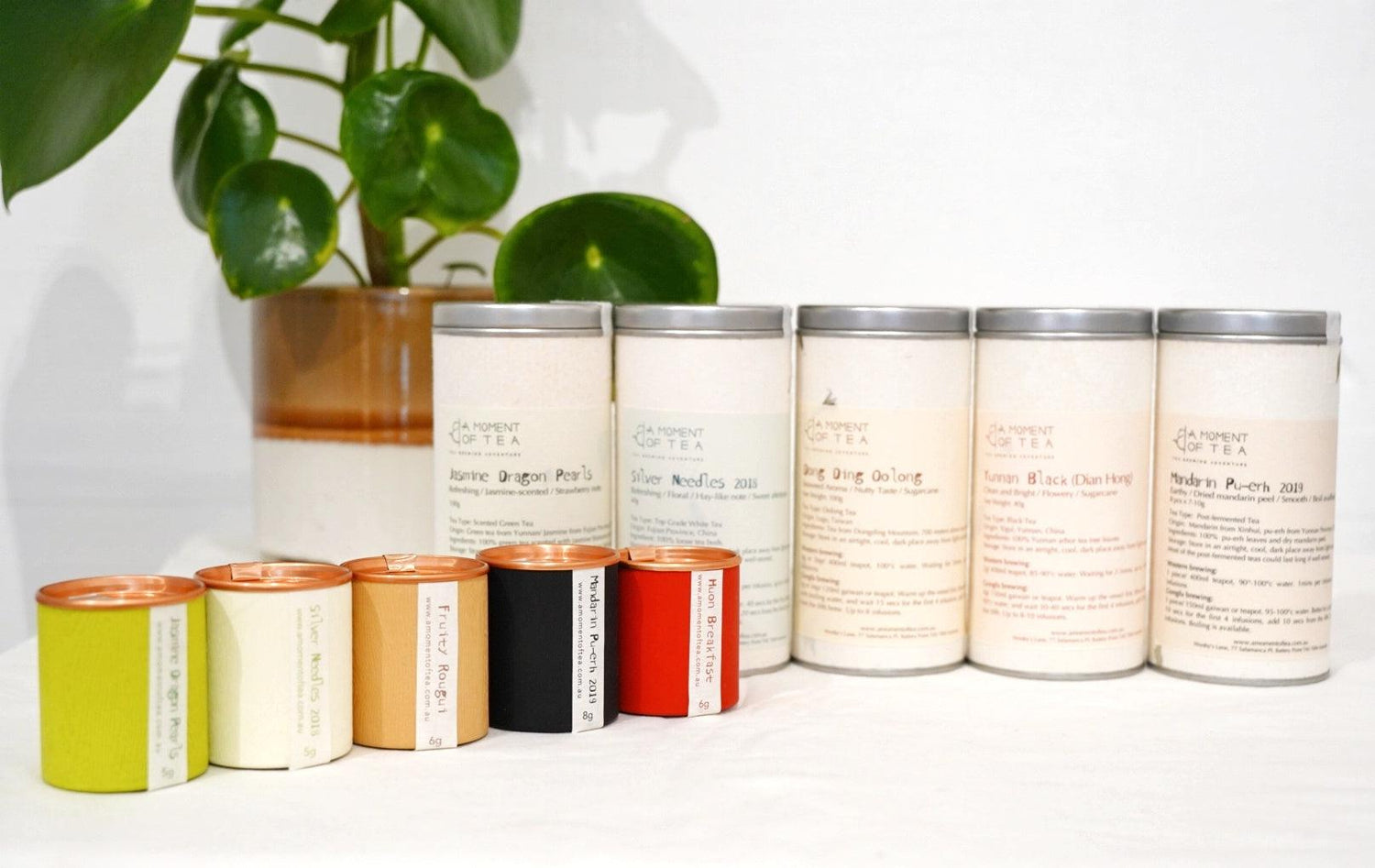
The other thing people underestimate is how much tea a small pouch holds. A 60g pouch of our Lavender Puerh makes around 25 pots, and each pot steeps twice. A 50g pouch of Mint Green is about the same. For the weight of a muesli bar you are giving someone a month of afternoons.
Which of our teas are actually Tasmanian
"Tasmanian tea" can mean two different things, and you should know which one you are buying. Very little tea is grown in Tasmania. What makes most of our blends local is the other ingredient: lavender, peppermint, pepper berries or grapes grown here, blended with Chinese tea in Hobart. One blend also uses Tasmanian-grown black tea. Here is how each one breaks down.
Tasmanian Lavender Puerh
Pu-erh (普洱, pǔ'ěr) is a fermented tea from Yunnan in south-west China. Ours is a ripe pu-erh from Menghai, wrapped with dried culinary lavender grown in Tasmania and blended here in Hobart. It was awarded a Silver Medal at the 2025 Royal Tasmanian Fine Food Awards. The cup is smooth and mellow with a soft floral finish, and the caffeine is low, so many people keep it for after dinner.
Martin tried it the way most visitors do. "Sampled this one whilst travelling in Tasmania," he wrote in his review a few months later, "and now it has become a night time staple."

Tasmanian Mint Green Tea
Organic peppermint grown in Tasmania, blended with organic green tea (绿茶, lǜchá) from Anhui. The mint is clean and cool rather than toothpaste-sharp, and the green tea gives it a light base. Medium caffeine. In summer a few of our regulars brew it double strength and pour it over ice. This is the one for someone who says they find tea boring.

Tasmanian Pinot Black Tea
Black tea — called red tea (红茶, hóngchá) in China because of its reddish brew colour — is the base here. We blend Tasmanian black tea and Chinese black tea with dried Pinot grapes from a local vineyard. You taste the grape first, then a mild tea underneath. It is the tea I reach for when someone at the Tea Bar tells me they are "not really a tea person", and it suits anyone who spent their week in Tasmania visiting cellar doors.

Tasmanian Breakfast Blended Black Tea
Tasmanian black tea with native pepper berries. The pepper berries do not make it spicy; they add a gentle warmth right at the end of the sip. Plum notes, a smooth body, and it takes milk well, so it works for anyone who wants their normal morning cup to taste a bit like where they have been.
Benjamin bought his at the market. "I am not a huge tea fan but when at Salamanca Markets I decided to have a few samples and went with the Breakfast Tea," he wrote. "Full of flavour and just has body." Racheal did the same with a sample while visiting Hobart, then re-ordered the larger pouch online once she got home.

Special Tea Box
If you cannot choose, this box holds three of the blends above, Mint Green, Lavender Puerh and Pinot Black, packed together with a brewing guide. We pack them by hand so the box looks like a considered present rather than something grabbed off a shelf. Maggie sent one as a gift and told us it "was very beautifully packed, and the recipient was thrilled to receive it."

Tips from our Tea Bar
A few things I say to people who are buying tea to take home.
Match the tea to the person, not to Tasmania. A coffee drinker will get on with the Pinot Black or the Breakfast. Someone who likes a quiet cup in the evening wants the Lavender Puerh. The person who claims not to like tea gets the Mint Green, iced if it is summer where they live. If you have no idea, the Special Tea Box covers three bases at once.
Taste before you commit. Every blend here comes as a small sample, and you can try them at the Tea Bar or at our Salamanca Market stall on Saturdays. Quite a few visitors buy the sample for themselves and the full pouch for the gift. If the sample turns out to be the one they like, they order the bigger size from home. That is how Martin and Racheal ended up as regulars.
When you fly, keep the tea in its original sealed pouch or tin with the label on. Dry, commercially packaged tea goes in carry-on or checked luggage on domestic and international flights without any liquid paperwork. If you are leaving Australia, declare it as food on arrival. Countries like New Zealand will want to look at it, and packaged dried tea is normally allowed through, but rules change and differ by destination, so check your arrival country's biosecurity site before you fly.
Out of room in the bag? We post Australia-wide from Hobart. Orders placed online go out the next business day, Monday to Friday, so a pouch ordered from the airport on Sunday night leaves us on Monday.
The Tea Bar is in Woobys Lane inside the Salamanca Arts Centre, 77 Salamanca Place, Battery Point. We are open Tuesday to Friday 11am to 5pm, Saturday 10am to 3pm and Sunday 11am to 4pm, closed Monday. On Saturdays you will also find our stall at Salamanca Market, a few steps from the shop.

Frequently asked questions
Can I take loose-leaf tea in my carry-on bag?
Yes. Dry tea is not a liquid, gel or aerosol, so the 100ml rule does not apply to it on domestic or international flights. Keep it in its sealed packaging and it can go in either carry-on or checked luggage.
Can I bring Tasmanian tea into another country?
Usually, yes. Declare it as food when you arrive. Commercially packaged dried tea is accepted by most countries after inspection, including New Zealand and the United States, but each country sets its own rules and they do change. Check your destination's biosecurity or customs website before you travel.
How long does loose-leaf tea keep?
Kept in its sealed pouch or an airtight tin, away from light, heat and strong smells, our blends stay good for 12 months or more. The Lavender Puerh is a pu-erh, which keeps well for years and tends to soften further with time. Green and mint teas are best drunk within a year.
Is the tea itself grown in Tasmania?
Some of it. Our Tasmanian Breakfast and Pinot Black both include Tasmanian-grown black tea. The Lavender Puerh and Mint Green use Chinese tea as the base, blended in Hobart with lavender and peppermint grown in Tasmania. We say exactly what is in each blend on its label and its product page.
What if I run out of luggage space?
Order online and we will post it from Hobart. Orders ship the next business day, Monday to Friday, anywhere in Australia.
Teas mentioned in this article
- Tasmanian Lavender Puerh — Menghai ripe pu-erh with Tasmanian lavender; awarded at the 2025 Royal Tasmanian Fine Food Awards
- Tasmanian Mint Green Tea — Tasmanian organic peppermint with Anhui green tea
- Tasmanian Pinot Black Tea — black tea with dried local Pinot grapes
- Tasmanian Breakfast Blended Black Tea — Tasmanian black tea with native pepper berries
- Special Tea Box — three Tasmanian blends with a brewing guide
- Tasmanian tea collection and tea gifts
Related reading: the story behind our Tasmanian Lavender Pu-erh.
Published: October 2026 | Last updated: October 2026