
How to brew with a gaiwan
A gaiwan (盖碗, gàiwǎn — literally "lidded bowl") is a three-piece brewing vessel made of a bowl, lid, and saucer. It is one of the most versatile tools in Chinese tea practice, used to brew any type of tea without absorbing flavour between sessions. It is also the standard vessel for gongfu tea brewing, the small-pot method this guide draws on. If you have never used one before, this guide will walk you through each step.
 A porcelain gaiwan set with matching cups, showing the bowl, lid and saucer
"How to hold it?" — that is probably the most common question I hear at Tea bar when someone picks up a gaiwan for the first time. It looks like it should burn your fingers. And yes, it can, if you hold it the wrong way. But once you learn the grip, a gaiwan gives you more control over your tea than any teapot.
Unlike a Yixing clay teapot, which absorbs flavour over time and works best dedicated to one tea type, a glazed porcelain gaiwan is neutral. You can brew a light green tea in the morning and a roasted oolong in the afternoon using the same vessel. The lid lets you smell the aroma after each steep, check the colour of the leaves, and adjust your next pour. That direct contact with the tea is why the gaiwan remains the standard tool in professional tea tasting across China.
Brewing step by step
At our Tea Bar, I teach this method to visitors who have never touched a gaiwan before. One of our workshop guests, Renga Rajan, described it well: "They start the ceremony then you continue, which is fairly easy to do." Here is exactly what we do.

Step 1: Warm the gaiwan
Pour hot water into the empty gaiwan, swirl it around, then pour that water over your cups to warm them too. This step is called wēnbēi (温杯). It keeps the brewing temperature stable and prepares the porcelain so your first steep does not lose heat to a cold vessel.
Step 2: Add the tea leaves
Place your dry tea into the warmed gaiwan. A standard amount is about 5g of tea for a 150ml gaiwan. For tightly rolled teas like ball-shaped oolong (乌龙, wūlóng), use a little less — the leaves expand to several times their dry size. For fluffy, unrolled teas like some white teas, you can fill the bowl a bit more.
Step 3: Pour the water
Heat your water to the right temperature for your tea type (see the parameter table below). Pour along the inside wall of the gaiwan in a slow circular motion rather than directly onto the leaves. This gives a gentler extraction, especially for delicate green and white teas.

Step 4: Place the lid and steep
Set the lid on at a slight angle, leaving a small gap for pouring. For most teas, the first steep is around 30 to 60 seconds. I'd suggest starting shorter — you can always steep longer next time, but you cannot undo bitterness from over-steeping.
Step 5: Pour
Here is where the grip matters. Hold the saucer in one hand if you like, but many people skip it. Place your thumb on one side of the rim and your middle finger on the opposite side. Your index finger rests on top of the lid to keep it in place. Tilt the gaiwan forward to pour through the gap between the lid and the bowl, directing the stream into a fairness cup (公道杯, gōngdào bēi) or directly into cups.
Pour in one smooth motion until the gaiwan is empty. Leaving tea sitting in the bowl between steeps will make the next cup bitter.
 Pouring from a gaiwan — the tea flows through the gap between lid and bowl
Step 6: Re-steep
Add more hot water and steep again, adding 10 to 20 seconds each round. Most oolong and pu-erh (普洱, pǔ'ěr) teas will give you 5 to 8 good steeps. Green teas usually manage 3 to 5. Each steep reveals a slightly different character — the fourth or fifth is often where a tea shows its best side.
Brewing parameters by tea type
These are the starting points I use at the Tea Bar. Your gaiwan size, water quality, and personal taste will shift things, so treat these as a baseline rather than a fixed rule.

| Tea type | Water temperature | Tea amount (per 150ml) | First steep | Re-steeps |
|---|---|---|---|---|
| Green tea (绿茶, lǜchá) | 70–80°C | 5g | 60 seconds | 3–5, add 20–30s each |
| White tea (白茶, báichá) | 80–90°C | 5g | 60–90 seconds | 4–6, increase more each round |
| Light oolong (轻焙乌龙) | 90–95°C | 5g | 60 seconds | 5–7, add 10–20s each |
| Roasted oolong (重焙乌龙) | 95–100°C | 5g | 45–60 seconds | 6–8, increase more each round |
| Black tea (红茶, hóngchá) | 90–100°C | 5g | 60 seconds | 5–7, add 20–30s each |
| Pu-erh (普洱, pǔ'ěr) | 95–100°C | 5g | 30–60 seconds (rinse first) | 10–20, add 10–20s each |
A note on rinsing: For pu-erh and aged teas, I always do a quick rinse first. Pour hot water over the leaves, wait about 5 seconds, then discard that water. This is called xǐchá (洗茶) — it washes the compressed leaves and helps them open up for the real first steep.
Controlling bitterness and astringency: If your tea tastes too bitter, lower the water temperature. If it is too astringent (that drying, puckering feeling), shorten the steeping time. Bitterness responds to heat; astringency responds to time. You can adjust each one separately.
Tips from our Tea Bar
After teaching hundreds of people to use a gaiwan at our shop at Salamanca Art Centre, here are the mistakes I see most often and how to avoid them.

Burning your fingers. This almost always happens because of overfilling. Leave at least 1cm of space below the rim. When the water level is too high, steam escapes around your fingers instead of through the lid gap. Fill to about 80% capacity and the rim stays cool enough to hold.
Lid angle too wide. If you open the gap too much, leaves will slide out into your cup. Tilt the lid just enough to let liquid through while keeping the leaves inside. A gap of about 2–3mm is usually right.
Pouring too slowly. A hesitant pour means the tea sits longer in the bowl, making those last drops over-extracted and bitter. Pour with a steady, confident tilt. The whole pour should take about 5 to 8 seconds.
Skipping the lid smell. After you pour, lift the lid and smell the underside. The aroma trapped there tells you a lot about the tea — sometimes more than the taste itself. This is something I learned early on during my training in Beijing, and it remains one of my favourite parts of each session.
Evie McRae, who attended one of our Tea Tasting Workshops, put it simply: "I didn't expect it to be such a relaxing and 'meaningful' experience but it was really special." That moment of attention — smelling the lid, watching the leaves unfurl — is where the gaiwan turns a cup of tea into something more.

One more practical tip: if you are choosing your first gaiwan, start with white porcelain in the 130–150ml range. White lets you see the true colour of the tea liquor, and that size is comfortable for most hand sizes. You do not need to spend a lot. A simple glazed porcelain gaiwan works as well as an expensive one for learning.
Gaiwan vs teapot: when to use which
A gaiwan and a teapot are not in competition. They do different things well. A gaiwan is better when you want to taste a tea clearly, compare different teas side by side, or switch between tea types during the day. A Yixing clay teapot is better when you have one tea you drink regularly and want the pot to build up seasoning over months. I use both depending on what I am doing. For tasting new teas at our shop, it is always the gaiwan. For my daily pu-erh at home, I reach for a clay pot.
Frequently asked questions
Can I use a gaiwan for any type of tea?
Yes. A glazed porcelain gaiwan does not absorb flavour, so you can brew green tea, oolong, black tea, white tea, or pu-erh in the same vessel. Rinse it with hot water between different teas and you are ready to go.
How do I avoid burning my fingers?
Do not overfill. Leave about 1cm below the rim so steam escapes through the lid gap, not around your fingers. Hold the rim with your thumb and middle finger — the rim stays cooler than the body of the bowl. With a bit of practice, it becomes second nature.
What size gaiwan should I start with?
A 130–150ml gaiwan is a good starting size. Smaller gaiwans (under 100ml) are harder to grip and pour quickly enough. Larger ones (over 200ml) hold too much water for most gongfu-style brewing. For solo sessions, 130ml is enough for 3 to 4 small cups per steep.
Do I need a fairness cup?
A fairness cup (公道杯, gōngdào bēi) ensures each person's cup gets the same strength of tea. If you are brewing just for yourself, you can pour straight from the gaiwan into your cup. When serving two or more people, a fairness cup makes a noticeable difference. We explain how to choose and use one in our fairness cup guide.
How is brewing with a gaiwan different from Western-style brewing?
Gaiwan brewing uses more tea leaves, less water, and shorter steeping times compared to a large mug or teapot. The result is a more concentrated flavour that changes with each steep. Western-style brewing uses fewer leaves, more water, and a single longer steep. Neither is wrong — they are just different approaches to the same leaves.
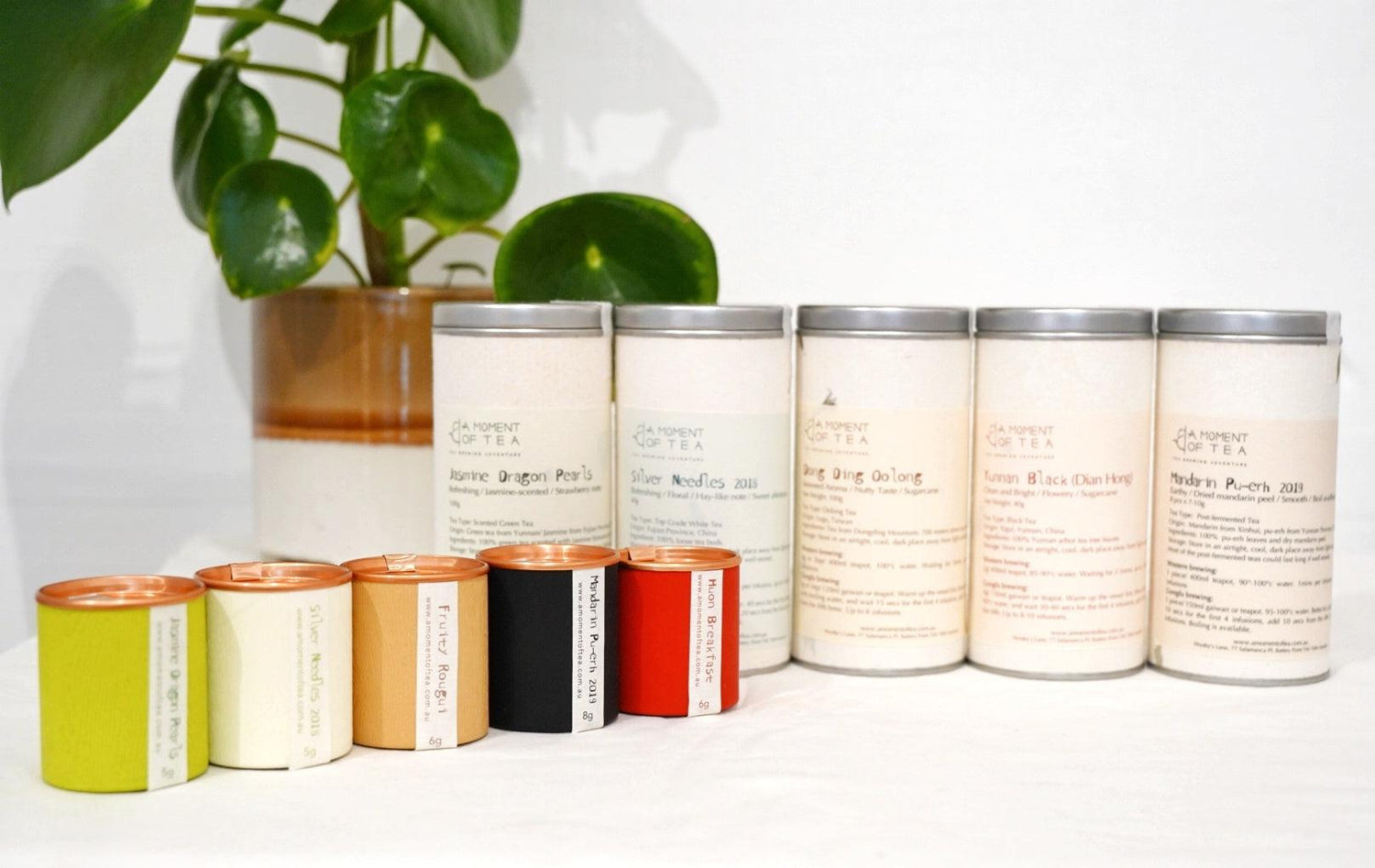
Teas and teaware mentioned in this article
Published: March 2026 | Last updated: July 2026
If you're in Hobart, drop by our Salamanca Tea Bar — we'll brew whatever interests you, no pressure to buy. You'll also find us at Salamanca Market every Saturday morning.